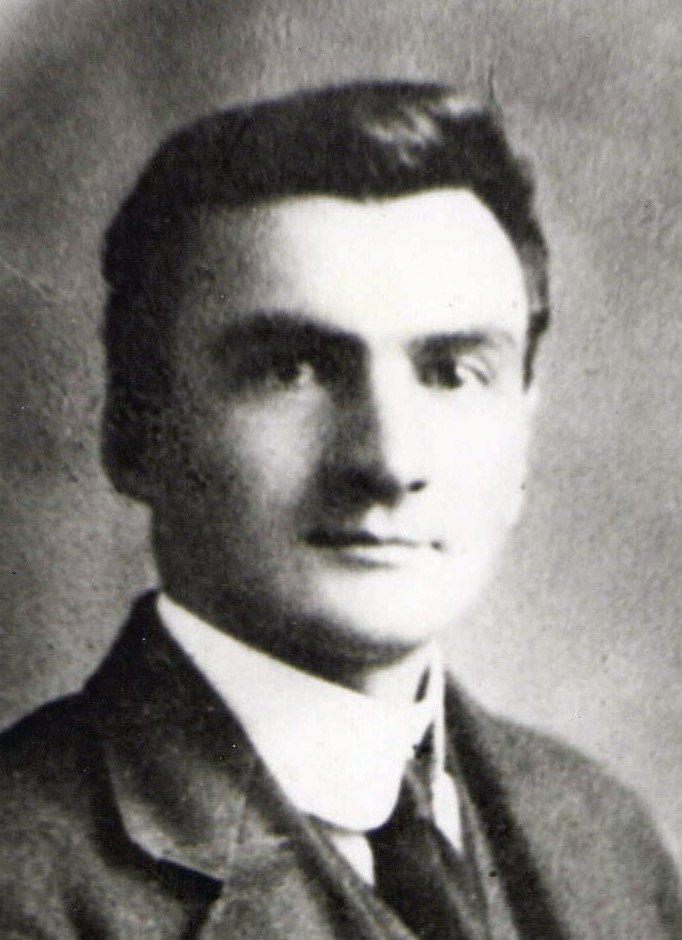
Monday, 20 June 2016

Here's Tae Us, Wha's Like Us?...

Observing and Imagining 'Others' in a 1934 Novel

About: J.S.Flett, Bid for Fortune: The adventures of four young men. Moray Press, Edinburgh & London, 1934. 
Note: Joseph Flett (1887-1976) had no middle initial. It seems the publishers thought he should have, and he may have chosen 'S' because many Smiths have a place on his family tree along with Fletts. (As far as is known, looking back at least to the mid-18th century, he was not related to the eminent geologist Sir John Smith Flett. Nor is there any known connection between his family and members of the Cree Nation with that surname.)

Joe Flett's novel Bid for Fortune, published in 1934, has already featured on this blog, considered both in relation to its post First World War setting and as a source of interesting sidelights on particular aspects of that context, notably the trans-Atlantic herring trade and travel in early 20th-century Newfoundland. Attributes of this kind are what can make it worthwhile to seek out and read such bygone works of fiction. At the same time, not very surprisingly if disappointingly, there are some more negative aspects to be acknowledged, in the way of attitudes and expressions of opinion, sometimes in the authorial voice, that are now, to say the least, problematic. To observe that they were apparently accepted without comment at the time of publication, and were shared by a large number of contemporary writers from the very famous to the more or less equally obscure, is not to excuse them.

'Other' stereotypes and generalisations: Race-pride and prejudice?

The idea that it is perfectly valid to generalise about large groups of people on the basis of what they are, e.g. as members of a race, nation, or gender, has not of course died out. (You only have to hear an English comedian going on about the French, and getting a reflex smug endorsement from the audience [to generalise a bit about the English].)  And arguably there is not much wrong with the thesis that a shared culture, heritage, environment and life-style may well result in certain shared characteristics being prevalent among the group. Problems arise when individuals are encountered, interacted with (or not) and judged only as belonging to the given group, with its perceived characteristics imputed to them a priori, instead of considering each as an individual. Readers of a novel like Bid for Fortune will decide for themselves where the line is crossed, and how much this sort of thing detracts from their appreciation of it - while perhaps adding to its value for cultural historians as a product of its time and even providing some incidental entertainment.

Some stereotypes are more favourable than others, and it is perhaps not surprising that the author's compatriots - his ancestors had their being in a small, close-knit (although not isolated) community in north-east Scotland for many generations - don't come off too badly. Three of the novel's main protagonists, flawed and conflicted characters though all four turn out to be, are "Scotsmen of the healthy country-bred type". This can work to their advantage as "a Scots accent helps a man along... especially in America."  Reputedly "Nobody is better at holding his tongue" than a "Scotchman". "Scotchmen" are also seen as "notoriously irascible", liable to the "ready pugnacity of the North". One of them catches himself on in the process of being "race-proud as most English and nearly all Scots are" (p.115): "What a very great country this might have been if only they had not let so many foreigners into it... would have dominated the world - of course for the world's own good..." he reflects, but then "came down from the heights of British moral superiority." Anyway, as someone points out (later, p.243) "Bandit, or pirate, or land-houper - that's how ancestors be always made."

The English are different, but then they are less fortunate, having to put up with "flat ditch-water kind of air... It's only north of the Tweed that a man can feel like a man." Boston is as "squalid as any English city". Jimmy himself is "an Englishman, not prone to easy credulity". "Snobbish English" are adjured not to despise cod and herring, important in the economic development of St John's, Newfoundland. Bad guys include "Cockneys of the worst class". To disarm suspicion it is found useful to display "truly British (as understood in America) ineptitude" and act like a "blatant specimen of the Great British Ass".  

Various sets of people come in for odd sideswipes or casual comment: "a Canadian speaking the truth, unusual for them"; "the coopers were black-avised, rough-looking Polacks instead of grimly smiling Scots". Two rum-runners have Irish names, while the book’s villain-in-chief is apparently Russian, although not much is made of this. Lunenburg, Nova Scotia, is the abode of Dutchmen, praised for their boat-building. A Syrian merchant is one of the few passengers on a cross-country train; on the same journey "a darky train attendant" with the "whole-hearted smile of his race" has a sympathetic cameo role. Nova Scotia is later found to be "full of deserted farms and powerful negroes". And the sight of "hordes of priests", observed at St. George's, is taken as a portent of "ill luck". 
 
On a giant liner there are "many jovial and sociable Americans and Canadians" making the voyage like "a big children's party". However: "The Americans didn't despise law-breakers; the only thing they really despised was poverty" - and (p.218) "Crime in America was a close corporation, something like a trade union. Each gang had its own district, its own hand-fed police..." Lawlessness entails the "need to travel Pullman - first-class was a risk in America, in the immediate post-war years. Third-class was good enough for any reasonable person in Britain."  The captain of a schooner has "Red-Indian-like features" but Native Americans don't appear as such, until the rather sudden announcement that the object of the sort-of-main character's affection is (p.272) "a native princess in her own right".

Portrayal of Jewish characters

The most obvious, recurrent and disturbing examples of racial stereotyping in the book occur in relation to Jewish characters, giving rise to colourable allegations of anti-semitism. It should perhaps be said that this accusation came as a surprise to some of those closest to the author, who did not recall him ever having expressed such views and thought them out of character. But it is hard to deny that the book lays itself open to it; there is a case to answer. Picked out and listed (as follows), the references to and characterisations of Jews do begin to look like a regular preoccupation, if not bordering on obsession, although no doubt in the less prejudice-aware 1930s it would have been easier to miss, among so much else in the book. And the "else", as has been shown, includes many other generalisations about various nationalities or kinds of people and even, at one point, something like a self-subverting send-up of such notions.

The root of the preoccupation may be indicated in the remark passed by one of the four central characters, Tommy, in relation to their plans: "We'll all bud out into herring importers, gaberdines and all. I understand the cured-herring trade in America is a pet preserve of the Chosen Race." The remark is particularly unsettling given who else was making similar complaints when it was published (in the mid-1930s), and what that led to. Its point is reinforced in the authorial and other voices as the narrative progresses. Adam in Glasgow finds himself "an amateur amongst experts" to wit "a little group of men, Jewish of feature but very American in accent, flitting about, following two coopers...noticing subtle differences..." who are seen as being "a' the time tryin' to deceive..." i.e. to get themselves the best deal. (One man's deceitful cunning is another's business acumen.) In relation to the herring trade, Flett was writing about what he knew, so it is probable that his comments (appreciation of expertise) were based on experience and observation, and not entirely unbiased (competition for native traders): "The fishing trade is an important one in Scotland, ranking next to agriculture..." (p.99).

Across the Atlantic: "The herring business seemed to be entirely in the hands of Jews" who treated it with "tremendous seriousness", sampling and taking bites of raw herring. A fellow Scot ventures to "hope ye'll mak the Jews sit up... things ower much their ain way." They are not always successful and enviable, however. On his cross-country train Jimmy encounters a  "New York Jew", who insists on recounting the "history of his life ... the usual hard-luck story with which nobody has any patience"; in fact he has been the victim of a swindle involving herring. Jimmy "felt sorry for him"; and "quite, or almost quite, believed his story" but can't be doing with his volubility, a sore trial to the taciturn Brit.

Not all the Jews' supposed attributes are negative, for example being "munificent to employees whom they valued"; and having "the tenacity of purpose of [this] race" as well as the "racial instinct to haggle" and a capacity for "real inveterate Jewish enmity". On the second-last page, "New York was pleasantly warm... even the Jews relaxing a little to the geniality of nature." Apart from such anonymous or minor characters - "a Polish sort of Jew at that"; "a Jew syndicate back of us" according to a rival gang in the rum-running episode - there are two who play significant parts in the story.

The more pejoratively presented, Maurice Levitt, is "smart" and young, whose intelligence and witticisms appeal to Adam without disarming his distrust; expecting to be deceived, he pre-emptively deceives Maurice by trying to appear thoroughly naïf. He is invited to lunch, welcomed into the home circle; introduced to "all kinds of Jew" and included in theatre parties, but inevitably his suspicions turn out to be justified. It may be that Maurice is based on someone known to the author - there was some word of him having been let down or cheated by an American business partner - and Jewish characters may of course be less than perfect (the Scottish friends have no strong claim to moral high ground either); the pernicious aspect is the implicit linking of his race with his defects. This tendency is reinforced when he is given a passage of internal monologue, with the obnoxious admission that he "despised the Britishers, yet secretly cringed before them". He claims to have spent three years in Scotland. His attempts to win Adam over include an allusion to him being "a hit with the girls" and an interesting riff on post-traumatic stress when Adam displays an exaggerated startle response: (p.222) "I should have remembered that you've been through the War," he said contritely. "I've noticed lots of our ex-soldiers jumpy like that, easy startled, can't bear to be touched. A terrible strain on the nerves it must have been. And long continued... It seems to have affected everyone who went through it, one way or another."

By comparison, Mr. Rufus Maclevy doesn't come off so badly. Adam and Jimmy, the characters who display most affinity with their author, each discover eventually that the "can't help liking Rufus" - whose first appearance has been as the victim, chosen for his affluence and accessibility, of the four friends' first attempt at seriously illegal activity, to wit kidnap and extortion. He is able to assess the fairly low level of risk they pose and to strike a bargain, initiating their subsequent adventures. In the end, having cemented their alliance against Rakovsky, the "virtual king of the underworld", it is he whose cunning plan and substantial resources extricate them from danger and difficulties and set them on a more acceptable course of life. "You can't beat the Jew, now can you, I ask you?" they conclude (p.265), with evident appreciation, adding a Biblical quotation: "... the more they were smitten the more they flourished and multiplied."

Future patriarch JF with his eldest son.
Canada, 1920-21

What about the women?

Given its date (1934) and best-fit genre (adventure story/ crime caper) it is not surprising that women don't get much of a look-in on the main action and are "other", even alien to the main characters, whose male bonding and default assumptions (carried over from the war and/or rooted in their culture) preclude their involvement on equal terms. Jimmy, in chapter 1 and a state of mind he later repudiates (blaming it on his experiences in the war), reflects that "Neither the War, nor that worse enemy, Women, had robbed him of his youth..." while "The women! - clean and sweet and gracious; they were what made life worth living. But he had met few of that kind." Later he "avoided women". They nevertheless pop up from time to time as part of the landscape or to add a bit of colour and detail: a "young coloured woman, quadroon or octoroon or some such blend"; a maternity nurse going to St. George's; a reference to "women being caught trying to smuggle valuable lace"; prohibition "killing the young men and corrupting the young women"; beautiful women in Boston, "frank and fearless enough." Adam resorts to flirting with a young widow although such behaviour was "out of his character" and is encouraged to revisit Maurice's wife and his "little friend Lucille", being supposedly "a hit with the girls". At one point (p.156) Jock and Tommy find themselves "comfortable and jolly here, in a house that held seven buxom and flirtatious daughters..." constituting a "Mohammedan (but, we hasten to add, completely innocent) paradise ..."

Only one female, Nelly Brown, appearing after more than 50 pages, is given a full name, along with a distinctive voice of her own, and a key role in the main action. She is notably transgressive, being one of the most deadly criminal gang who lures Tommy into their clutches (albeit protesting when it looks as though he may be killed) and later persuades him and two of the other pals into a planned escape so that they can be followed. She also persuades them to finance her own escape from the gang, purportedly to set her up in a little shop in her native village. Tommy is happy to believe they have had the "chance to pull a girl out of the mire and set her on her feet again". He briefly considers the idea of her joining in their enterprise, only to realise "a woman would spoil everything". He perceives the plight of "a girl on her own" which is also Nelly's rationale for what she does: (p.68) "It was a hard old world... Aw, well, he was only a man anyway. She hated men. Disgusting, sensual brutes... They cared nothing for women except in the satisfaction of their brutish appetites. Or the tickling of their contemptible vanity. They ruined girls, then laughed and crowed over it..."

A different kind of female is on hand when rescue, rest and recovery, and at last a personal (quasi-existentialist) resolution are required for Jimmy. Not that their first meeting is conventional; saved from hypothermia and exhaustion by a woman's cry and "surrendering control once he recognised safety" he ends up being nursed by Cissie and her sister Susie, but not without being attacked by their axe-wielding mother. Passing over this incident - "She's had a hard life, and now she's got crazy about money; but we'll take good care she doesn't get the chance again" - he lapses into "voluptuous ease", "utterly content for the first time since the War" and enjoying the "atmosphere, familiar to the lucky amongst us, of being petted and nursed by devoted women.." as in the "paradise of the true believer". It has been explained that two men of the family are away for most of the winter and one is working elsewhere, and that "Susie would be going away in the fall. There was no keeping young girls at home nowadays; they would go... Young gels got desperate like when there wasn't no young men about. But Cissie was a good quiet girl, content with the day's work." Apart from this, the sisters are not clearly differentiated; they share a physical description - sheeny golden brown hair, friendly eyes, musical voices, soft cheeks, and "both had that peculiarly well-bred manner, direct and fearless. treating all as equals and none as superiors, of those brought up in the complete independence of the wilds."  After further adventures and a deal of introspection, Jimmy decides that it's Cissie who is "the only girl in the world for him" and duly finds her waiting for him. - [THE END]

Rumour has it that the "love interest" was a late addition at the behest of the publisher, which may be seen as some kind of plea in mitigation. It seems they had nothing to say about the more regrettable features of the work, as quoted and criticised above.

**************************
Anyway that's probably enough to be going on with about this (not quite deservedly?) obscure, almost forgotten novel - unless anyone has the bright idea of organising a new edition, or an adaptation for radio, film or TV... Could work?

*****************


Saturday, 21 May 2016

A Findochty Flett in Canada

In Imagination and Memory...

Joseph Flett was aged 27 when he sailed to North America in August 1915, 28 when his young wife and baby daughter joined him in May 1916. While he may at that time have intended to make a permanent home in Canada, circumstances decreed otherwise and he had returned to Scotland 13 years before his novel Bid for Fortune was published in 1934. The book contains several chapters set in Newfoundland where he had spent over five years. Although a work of fiction presented as an escapist adventure story, it clearly draws extensively on the author's knowledge and experience (as well as his thoughts and feelings), including some about his temporarily adopted country.

Written on May 21, 1916:
"No desire to return to Scotland", but circumstances decreed otherwise five years later
In the context of post First World War alienation and lack of prospects the four main protagonists in the novel, after a failed business venture, turn to less legal schemes for securing some kind of future for themselves. While one takes care of the main plan, to smuggle accidentally-acquired diamonds into the USA with a view to disposing of them, the other three proceed via Newfoundland to rendez-vous with him in New York. Rather than wait idly, they decide to have a go at putting another idea into practice, rum-running from the French colony of St. Pierre to the Prohibition-era dry States. Rum-running to the USA, one of them has argued, would constitute a "real service" as well as being "almost respectable":

"For the greater convenience of rum-runners and Newfoundland fishermen - they've got Prohibition even in their foggy clammy island, poor devils! - there happens... to be two bits of rock off the south coast of Newfoundland that still belong to the sensible and thirsty Républque Française... an oasis in an arid land." (Chapter 5, p.55)

Anyway: "The Americans didn't despise law-breakers; the only thing they really despised was poverty. And rum-running was by now almost a respectable industry in the States."  (Chapter 14, pp.128-9)

On board ship their fellow passengers "cursed Prohibition. It was leading the youth of the country astray... It was killing the young men and corrupting the young women." (Chapter 17, p.148)

The next morning they were swishing through slob ice, with an occasional bump and grinding into the harder hummocks. Late in the afternoon they came up to the narrows of St. John's harbour. Huge cliffs towered above the narrow channel, bare grey rock plastered white in every cranny with snow, formidably wild and desolate-looking. Wooden huts and scaffoldings of fishermen [boats] perched on shelves of rock just above the water. A grim land it looked. Passing through the narrows, they entered a calm, land-locked harbour, full of drifting ice and little anchored schooners, Christmas-toy-like in their frosted shrouds and the long icicles pendent from bow and stern and gunwales.
 ... A small fleet of sleighs awaited the landing of the passengers... A grim country. A devil of a climate. (Chapter 17, p.148-149)

These first impressions are expanded into a more elaborate description of the place (with a small sting in the tail): "A rover of the sea turned merchant... St John's achieves, too, the metropolitan air... shares in the councils of the nations. She has a parliament all of her own... active mentally, and that's the great thing... It loves to take the stranger in, in one way or the other." (Chapter 18, p.150)


The next objective was to be Saint-Pierre-et-Miquelon, travelling to which was possible but advised against by locals at this time of year, the advice being heeded by only one of the three: "Jimmy, listening to the proposed itinerary, ruled himself out of it. He wouldn't, deliberately and of his own free will, shove himself into such horrible discomforts. But Tommy and Jock were still of the mind to go through with it." (p.151)

Tommy and Jock decide to kit themselves out, gradually, in seamen's clothing –

Then, on pretence at first of touring the outports, they crept down the coast, from one fishing hamlet to the next... until at last, from long rubber thighboots to mackinaw and ear-flapped cap, there was naught to distinguish them outwardly from the most native of natives. The local accent, a peculiar blend of West-Country English with the Irish brogue, presented much more difficulty to Jock... Jock, they decided, would have to pass as a Cape Breton Gaelic-speaking Scotsman, in whom any variety of English, from the purest to the most broken, gives no surprise to anybody - or at least so they had gathered from their boon companions in St. John's.
From Placentia... they drifted down... Everywhere they landed they found houses that would take in the weary traveller for a dollar or two... (p.154)

After an enforced wait that turns out to be "comfortable and jolly" in Grand-Bank, Fortune Bay, "there came a morning at last, even in a Newfoundland February, when the raging seas simmered down into a sullen heave of swell."

They landed on rocks at an unfrequented part of the island...
Saint-Pierre was quiet.. The transatlantic headquarters of the French cod-fishing fleet, its busy time was over for a year, except for the occasional visit of a big French trawler and its surreptitious activities in the rum-running trade...
The cod-fishing business was not what it had been. Newfoundland long ago had done its direst to kill that trade by prohibiting the sale of Newfoundland bait to the French, and in any case the business of fishing was getting more and more into the hands of big steam-trawling companies... (p.157)


While this adventure proceeds:

Jimmy put in the three weeks' waiting at St. John's pleasantly enough. He skated on the ice-rinks; he practised snow-shoeing until he quite fancied himself as an expert; he played poker and bridge; avoided women... As soon as it was certain that Jock and Tommy had made the passage, Jimmy packed up and took sleigh for the railway station.

The journey turns out to be something of an epic one. "The train lurched and bumped... in a manner disconcerting to the novice", eliciting the reassurance that [JF does the voice] 
"This ain't the season yit foh upsets. Next month now, yoh go to sleep mebbe in a lowah berth and waken up in a uppah berth with the train turned right upside down"  - in which case the procedure would be to climb out by the windows, with "drifts of snow fawty feet deep sometimes" at the "tops'ils". Asked "How do you like it up here?" the attendant replies that there are drawbacks and 'vantages: "We coloured gemmen have fah moah considuation up heah, sah. But dis consumption play the devil with coloured folks up heah, sah." (p.181-182)

The same attendant breaks the news to him when they get snowed in, and the conductor confirms that nothing can be done until the storm blows itself out and the "rotary" clears a way for them, which might take weeks. There are very few passengers in the sleeper - "Only the strongest urgency could persuade anyone to do the cross-country voyage at this time of year" - and after three days of being cooped up with them Jimmy, "ready for anything, no matter how desperate, that would break the monotony", decides to set out walking. Grand Falls he reckons is only about 80 miles away; some houses are scattered along the route; he expects to find "lots of English people there, employees of Northcliffe's paper mills".  Although he goes equipped with snow-shoes and green-tinted spectacles bought from a fellow passenger, his initial optimism as he begins "to follow the line of railway telegraph posts over the deep and pathless snow" is seriously misplaced.

On the point of collapse, he is rescued by a gaunt elderly woman and then tended by her two young attractive daughters, in whom he observes "that peculiarly well-bred manner, direct and fearless, treating all as equals and none as superiors, of those brought up in the complete independence of the wilds". However (half way to Grand Falls after ten days):
The happy interlude was brief, as usual. One morning smoke was seen down the line; then came the rotary, throwing up cascades of snow before it.. [The train] did not come along until the next day. With the usual obligingness of Newfoundland trains it stopped for Jimmy's excited wavings and took him aboard. (p.204)


The remainder of the journey is more pleasant - 
Without much apparent thaw the snow had long since begun mysteriously to disappear... The first taste of spring comes sudden and sweet in the countries of the long long snows…
The barren monotony of the interior changed as they came to the West Coast to high hills and woodlands. The River Humber roared through its steep and matted gorge down to Bay of Islands, still fast and serene under six feet of ice. It was a strange sight to Jimmy to see horses and heavily laden sleighs creeping over the frozen sea.

The country had a further test of endurance in reserve - 
"... when they arrived at Port-aux-Basques, the terminus of the railway and the port of transhipment for Canada. The s.s. Kyle had already been waiting there two days, already full of passengers who had come with her direct by sea from St. John's; the gulf was full of heavy ice, now packed close and tight to the land by the in-wind that had been blowing... The usually spick-and-span mail-boat had been putting up a losing fight against overcrowding and delay... (p.206)
"Another day of dank, smelly, tedious misery... then Jimmy woke up to woke up to the throbbing of engines and the swish and grind of a ship forcing her way through ice...
Up on deck the air was dancing, the ice-fields glittering in the strong sunlight. 

Finally - 
Here was the land again, praise be! and freedom from the mob. A drink!.. He had been looking forward to it ever since he smelt that ship. Now without preparation or softening the blow was dealt to him. Nova Scotia was dry. The country of all countries that needed a drink to was down its miserable dullness was dry!
The Syrian, who had been a fellow-passenger... now proved a friend in need. Nova Scotia was dry all right; but you could get all you wanted just the same; the only real difference was that you now had to pay through the nose for it.
... In defiance of all law, Jimmy was a bit flushed and smiling when he joined the train at North Sydney that evening. (p.209)

Jimmy's farewell to Canada is not final. After the four friends are reunited and share some further adventures and difficulties, they each end up (spoiler alert) with a substantial sum of money, and the partnership is dissolved. Jimmy,'with whom the narrative has opened, also occupies the closing chapter, in which after much soul-searching and existential agonising, he diagnoses the root cause of his troubled state as "nothing but that most common of ailments, the mating fever".
He had been unhappy... ever since he had left that lonely spot in the wilds... His mind went back to that scene, visioned the snow and the lake and the little fir tree.. Suddenly young Susie's face flashed up and filled his mind...
Having been characterised as English (distancing him from Joe) and therefore prone to snobbery, he has to account for his choice of this young woman from the wilds (while remaining apparently unfazed at the prospect of an intermittently homicidal axe-wielding mother-in-law). A momentary misgiving is set aside - "Susie was not a young savage; she was a native princess in her own right... glorious and free." (pp.271-273)


Recollecting -  her mother had said there was "no keeping young girls at home nowadays"  - that "she had been thinking of going away, of leaving home; a lamb going out innocently unafraid into the jungle" (pp.275-276) he loses no more time in organising his return, "a different man", to a different experience:
The s.s.Kyle, now neat and clean enough. Port-aux-Basques, raining as usual, but this time warm muggy rain. The casual leisurely crawl of the Newfoundland train... the homely genial atmosphere that more than made up for all discomforts... No such thing as time in Newfoundland: nothing for it but to wait, as tranquilly as everybody else. (pp.277-278)
The train may be slow, but the story now skips briskly onwards to the required happy ending.

*****************
(A more thorough and critical review of the novel appears later on this blog.)

J.S.Flett, Bid for Fortune. Moray Press, Edinburgh & London, 1934
The adventures of four young men. Price 7/6 [Seven shillings and sixpence = 37.5p. 
Second-hand copies have been available on-line at different highish prices, e.g. at £35 about 12 years ago, £399 (80 years after publication), £50 without jacket (currently).]

The book sat well with its mid-1930s contemporaries in the Moray Press list
 of (would-be) popular but far from unintelligent adventure yarns.

Saturday, 14 May 2016

National Health in the Highlands and Islands

Addendum to previous post

The Highlands and Islands Scheme

            To provide a comprehensive medical service which would comply with modern standards special measures have been necessary in the sparely populated and poor area of the Highlands and Islands, where communications are still often extremely difficult. Inquiries made in 1850 showed that there was only one doctor to serve the 5,000 people who were scattered along 60 or 70 miles of the Sutherland coast.In the Isle of Lewis there were only three. Not only were doctors' fees impossibly high for the people, for it sometimes took several days to reach a case, but the medical men were desperately overworked and nearly as poor as the people they attended. Conditions were substantially the same after the [1914-19] war, when the scheme was launched [inexact].

            The Highlands and Islands Medical Fund, administered by the Department of Health for Scotland, has a total income of £80,000 a year - £70,000 from the State and £10,000 from the National Health Insurance Fund in respect of the mileage allowance which would normally be paid direct to the insurance practitioners. From these grants are made to doctors for attendance at reduced fees on families of insured persons and members of the cottar and crofter classes. This makes possible a visit from the doctor for a maximum fee of 5s [5 shillings = 25 new pence] - irrespective of the distance he has to travel. Care is taken to see that adequate income is provided for the doctors, who are panel doctors and often medical officers engaged in statutory health duty in addition. Transport by car and motor-boat has also helped to improve their positions, with the result that more highly qualified men are attracted to practices in the far north and west or in the islands of Scotland. Some indication of the value of the service is given by the fact that the proportion of uncertified deaths has fallen from 10.54 per cent. in 1911-13 to 4.51 per cent. in 1931-33.

            The service has also brought about a vast improvement in the nursing arrangements. About 200 nurses are now employed in the area, and close co-operation between them and the doctors has been secured. Hospital and specialist services have been centralised at the Royal Northern Infirmary at Inverness. This has been made possible partly by developing the wireless and telephone communications of the Highlands, and by creating an air ambulance service. All who have examined the service have been impressed with it, and the P E P Health Report commented: "The co-ordination of the services for doctors and nurses, the use of modern methods of communication, and the tentative development of a centralised hospital system are object lessons to other parts of the country."

 - pp.168-170 in Britain's Health by S. Mervyn Herbert, 1939, a Pelican Special based on P.E.P. (Political and Economic Planning) Report.

The Dewar Committee was formed in 1912.
From Saints and Sinners, by Iain Smith and Joan Forrest, Acair, 2017

Mr. AINSWORTH 
asked the Secretary for Scotland whether his attention has been drawn to the necessity of an improved medical service for the Highlands and Islands of Scotland, and also to the fact, as made clear by the Report of Sir John Dewar's Committee, that the rateable value of the Highland counties is insufficient to meet the demands of modern local government, especially as regards medical service; and what steps he proposes to take to remedy the present state of affairs in these counties?
Mr. McKINNON WOOD 
I have carefully considered the Report of the Committee, and my knowledge of the Highlands and Islands leads me to agree entirely with their view that an improved medical service is urgently needed. The Report has also received the sympathetic attention of the Government. A special item for the current year dealing in part with this matter appears in the Supplementary Estimates, and the whole subject is receiving the most careful consideration.

43. Mr. CATHCART WASON 
asked the Financial Secretary to the Treasury whether, in view of the pressing needs of the Highlands and Islands for medical nursing and sanatorium treatment, and the recommendations of the Committee presided over by Sir John Dewar, and of the fact that these recommendations have been unanimously approved by the Scottish Liberal Members, he will state when he will introduce the Bill which he has promised, especially in view of the fact that it is stated the Bill will be non-controversial?
44. Mr. AINSWORTH 
asked the Financial Secretary to the Treasury whether he is aware of the disappointment felt in the Highlands and Islands of Scotland that no practical effect has yet been given to, the recommendations of the Committee presided over by Sir John Dewar; and, seeing that the necessary money has been promised, will he say when the statutory authority to administer the Grant will be set up?
54. Mr. MUNRO 
asked the Financial. Secretary to the Treasury whether, looking to the urgency of procuring money for medical service and nursing in the Highlands and Islands of Scotland and, to that end, of giving statutory effect to the Dewar Report at the earliest possible moment, he can now state when the Bill providing the money and setting up the authority to administer it will be introduced?
Mr. MASTERMAN 
The Bill is already in an advanced state of preparation, and will be introduced as soon as the exigencies of Parliamentary time permit. The Estimates presented to Parliament include a sum of £10,000 only in respect of the proposed Special Grant for the purpose of providing for special charges in respect of insured persons pending the setting up of the new machinery. A Supplementary Vote for the balance of the Grant will be required when the Bill has received the Royal Assent.
MARQUESS of TULLIBARDINE 
May I ask, in view of the statement in Question No. 43, that the Bill will be non-controversial, whether the right hon. Gentleman has come to an agreement with the Secretary for Scotland on the full details of the Bill?
Mr. MASTERMAN 
It is a Government Bill in every sense of the word, and is, I believe, non-controversial as between the two parties in the House.
See also: 
Crosfill ML. The Lewis hospital, Stornoway: some aspects of the development of medical care in an island community. Medical History 1973; vol. 17, no.1, pp.49-60. 


Wednesday, 20 April 2016

A Stornoway Girl in New York, 100 Years Ago

A world away from the war...?


A Letter from Canada, May 1916

The writer of the letter transcribed below, aged 22 at the time of writing, was the daughter of a Stornoway shopkeeper. After some time as a student at the prestigious Atholl Crescent College of Domestic Science in Edinburgh, in 1913 she married Joe Flett from Findochty, whose family's fish-curing business took him to Canada in August 1915. This was before the introduction of conscription, but his involvement in work of national importance (food supply) might have rendered him exempt in any case.

Outward Bound passenger records show Joseph Flett, aged 27, Fish Curer, sailed 20/08/1915 on the Tabasco from Liverpool to St Johns, Newfoundland. Country of last permanent residence England, intended future permanent residence Newfoundland.


Outward Bound passenger records show Mrs. Flett, H'Wife, sailed 23/04/1916 on the Tuscania from Liverpool to New York, not shown to be accompanied by husband or child: Country of last permanent residence “Br. Protectorates” [maybe they didn’t know where the (old) Hebrides were?!]; intended future permanent residence USA.
[Some of this doesn't quite fit, but perhaps her seasickness prevented her details being recorded properly if this was done after embarkation, and explains her child not being close by - see letter.]

In fact Mrs. Flett (Lizzie) had her 15-month-old daughter with her and they were going to join Joe in Canada. He met them off the boat in New York and they spent the next 4 days in the city.

Atlantic crossing record for Joe


Atlantic crossing record for Lizzie
Border crossing (Canada-US) for Joe, 27-4-1916
--------------------------
A. Flett & Co.
of Buckie Scotland
Herring Curers


Curling, Newfoundland
21st May 1916

Dear Ma,
            At last I have reached my destination & found time to write. It is more than a fortnight now since we landed; we spent a week in New York & took 4 days to go from there to St Johns where we stayed another few days & finally reached here last Wednesday.
            Marjorie is none the worse of all this moving about & is as fat & rosy as ever. The people in New York used to stand & gaze at her rosy cheeks, the children are all very pale & pasty there. She was not a bit sick on the "Tuscania" but I was bad the first two days. I don't know what would have become of Marjorie those days, but fortunately I fell in with an Irish girl who took a great fancy to her & looked after her all the time. She was going out to Bermuda as housekeeper to a naval doctor; she was one of the most decent creatures I have ever met. She thought that babies should get a bit of everything that was going & when I came up on the 3rd day I found Margie having a high old time with peppermints & ginger cake. She even used to get her share of biscuits & cheese at lunch.
            It is a wonder to me she wasn't half dead, but she fairly enjoyed the trip & was the pet of the whole ship - "Red coat" was all the rage. You would have laughed to see her trotting down the deck in a breeze with the deep sea rowl & her head down in the approved style. Joe met us at New York & fortunately she went to him at once - I was quite thankful. He was wild because I did not travel first class & understood all the time that Mary was coming with me. We had a most glorious time in New York, it beats London & Paris to sticks - better shops, better theatres, better restaurants & better fashions & far nicer things to eat. I was just enchanted with the famous Broadway & 5th Avenue. We went about all the time with Mr & Mrs Vidvotsky wealthy Russians in the herring trade. They were awfully nice to us - their servant took Margie out in the afternoons & stayed with her at nights. We bought a nice small American pram which was most useful - you should have seen Joe pushing it down 5th Avenue - I wouldn't dare put my hand near it. We used to take her out ourselves in the mornings, then the girl took her to the park in the afternoon while Mrs Vidvotsky & I went to a matinee or shopping & our husbands did business. Then after we had put Margie to bed we would all go off together to dinner, the theatre & have supper at some dancing cabaret. Mrs Vidvotsky is awfully nice - she is only 24 & has been married 5 years - they have no family. She showed me round all the shops - I bought two nice hats & some white blouses also a white linen dress. The childrens clothes were simply lovely. I got some nice dresses for Marjorie - a fine yellow linen empire, with turned back cuffs & collar of white & a black velvet belt - short sleeves. She is a dream in it with blue socks & black patent slippers; I also got her a blue in same style & a white linen with blue smocking. All this description is for Mary A's edification.
            We came up to St John's by boat & of course I was sick again. It is quite a busy place but the shops are not up to much and the fashions very demodé. If I was old fashioned in New York, I was the biggest swell in St John's by a long chalk. This place is nearly a day's journey from St John's. It is very quiet, but pretty & I think I will like it all right. Joe is not yet sure whether we will be here for any length of time. He likes being here very much & says he has no desire to return to Scotland. He says I may go home for 2 months every winter if I like, but who would be bothered crossing the Atlantic in winter for that.
            Joe is quite balmy about Marjorie - I found that everyone in the place had seen her photo & knew her name, age & weight & one kid had a doll called after her. [...]

            I will be expecting a letter soon with all the news. [...]

                        Love from us all

                                    Lizzie

Birthplace of the couple's two younger children
"Curling is a sub-division of the city of Corner Brook, Newfoundland and Labrador. Located in the humber arm of the Bay of Islands, Curling was originally a fishing community. It is the oldest section of Corner Brook."

Studio portrait of Joe
Studio portrait of Lizzie


Toddler Marjorie
in Newfoundland

The letter was addressed to her mother in Francis Street, Stornoway

SS Tuscania was a luxury liner of the Cunard subsidiary Anchor Line, named after a town in Italy. She was torpedoed in 1918 by the German U-boat UB-77 while transporting American troops to Europe and sank, sending 210 people to their deaths.[3] https://en.wikipedia.org/wiki/SS_Tuscania_(1914)
See also; http://www.islayinfo.com/loss-troopship-tuscania-islay.html


A commemorative service was held on the centenary of the Tuscania tragedy (BBC Scotland news item 5-2-2018, also available in Gaelic.) [And see comment below].