Showing posts with label herring industry. Show all posts

Saturday, 14 September 2019

Fishcuring Fletts of Findochty

Founder of a Family Business

The Alexander Flett whose firm embarked on the Newfoundland Fisheries venture in 1907 was not the first nor the only one of his family to make a noteworthy contribution to the herring industry of north-east Scotland. That their surname became 'a name to conjure with' in the fishcuring context may be attributed to the energy and entreprise of his father, James, whose death in 1897 drew a remarkable double tribute from the county's weekly newspaper.


"A portrait of the late Mr, James Flett, Findochty, whose death we announced last week"
 -  Banffshire Advertiser, 28 January 1897


DEATHS... At 42 Findochty, on the 14th inst., James Flett, Fishcurer, in his 80th year.
 -  Banffshire Advertiser, 21 January 1897


THE LATE MR FLETT, 
FINDOCHTY
By the death of Mr James Flett, senior partner of the firm of J. Flett & Sons, one of the best known, familiar and striking figures has been removed from Findochty. Mr Flett was born at Findochty in 1817, and was thus in his 80th year. His father was Alexander Flett, his mother Margaret Smith, both of Findochty. He served an apprenticeship as cooper with the late Mr Taylor, fishcurer, Findochty. After completing his apprenticeship, he worked for some time as a journeyman with Messrs Walter Biggar & Co., who were the first curers to send Scotch cured herrings to the German markets. He commenced fishcuring on his own account at Peterhead in 1839, and at Findochty, his native village, in 1849. Mr Flett married Catherine Pirie, daughter of the late Alex. Pirie, who belonged to Banff, and who went to Findochty many years ago as manager for Messrs Walter Biggar & Co. His wife died on January 3rd, 1868. Mr Flett's family of three sons and five daughters all survive him. The sons are all in the business so long carried on by their father. Of the family to which Mr Flett himself belonged, the eldest brother, Alexander Flett, died in Findochty in 1892, aged 88. There still survives another brother, William, surnamed [nicknamed], from his uncommon strength, "Wallace". This nonagenarian celebrated his 90th birthday on 5th January of this year. The deceased gentleman was a man of splendid and striking physique. Standing as he did six feet three inches in height, no one could fail to notice him. He was of a kind and genial disposition, a great favourite with everybody in the village, particularly so with the young. Of children, he was very fond, and to run up to him in the street, seize his hand or his huge staff, was sufficient to dtaw forth a "sweetie," from his capacious pocket and a blessing fron his generous heart. He had a fund of quaint humour, and was known and respected throughout the whole of the North of Scotland. Few strangers went to Findochty without giving him a call. 
    Although he never took an active part in public matters, he was a keen politician. Some years ago, a navigation class was started in Findochty, under the auspices of the County Council. What was the teacher's surpirse one night when the class was gathering to see the venerable form of Mr Flett walk into the room, pay his fee, and enroll his name among the rest. Anything that looked like the more scientific working on the sea and of its products was to him a source of personal interest. A Liberal in politics, Mr Flett was a Free Churchman, He was a life-long friend of the late Rev. Robert Shanks, the first Free Church minister in Buckie, and a correspondence was kept up between them till the demise of the latter. A few years ago, less than ten, another well known figure was seen paying a visit to Mr Flett in Findochty. This was "La Teste", the Elgin poet, To hear these two comparing notes, or to hear Mr Flett calling attention to points of similarity in the life and fortunes of himself and "La" was no ordinary treat. In the death of Mr Flett, his own generation see another place left vacant never to be filled; while the younger race, deprived of his portly figure in the street, and the kind smile from his open face, will feel the place srange, and the town less homely. It may be mentioned that the last work on which the deceased was engaged was in arranging volumes of Spurgeon's sermons, copies of which he had from the beginning of their publication. Mr Flett was a great reader and had a love of poetry, his favourite author being Scott. 
   The funeral took place on Monday and was largely attended, the coopers carrying the coffin when it left the house and also at the grave.
 -  Banffshire Advertiser, 21 January 1897
=================
The impression of warmth, sincerity and personal feeling in the above is reinforced by the author (possibly the same) of the paper's regular column of informal chat, local news and common-person views, written mostly in the Doric.

FIRESIDE TALK O' AUL'  FREENS
    Willie -- I was unco' sorry to learn that ane acquaintance o' mine, in the person o' Mister Flett, fishcurer, Findochty, had passed awa' fae this weary warl' last week, Nae doot he's been spared to his family an' freens for a gie puckle longer than is the lot o' mony, bit for a' that fin death comes an' tak's awa' even the aul'est o' oor freens an' neepers, peer, frail, human natur' canna keep back the fa'in' tear or hide the pang o' sorrow an' regret at the pairtin'.
    Geordie -- The curer 'll be unca mair missed in Finachty. He wis aye ready to help the needy, to cheer the dooncast, an' to encourage the young. Nae doot to some he may at times hae appeared to be caul' an' stern, bit fatever may hae been the appearance ootside there wis aye the warm, kin'ly heart within.
     Jamie -- I speak from personal experience of the sympathetic heart which beat in the bosom of Mr Flett. Of course it would be sheer mockery on my part to say that he was perfect (the perfect man must be translated to some other sphere as it has never been my lot to meet him yet-------
    Maggie -- I cud tell ye faur ye wid see him, bit I winna dee't evnoo.
    Jamie -- There were many traits in the deceased's character which it would be well worth our while to seek to emulate, These points I need not dwell on now as they will readily come up before those who had the pleasure of his acquaintance. Of him I think it may truthfully be said
To all he was pleasing -- to auld and to young --
To the rich and the poor, to the weak and the strong;
He laughed with the gay -- moralised with the grave
The wise man he honoured -- the fool he forgave. 
   Geordie -- That wis the curer's character to a T. He wisna ony o' yer harem-skarem patienceless creatur's that the warl's sae foo o' noo-a-days.
 -  Banffshire Advertiser, 21 January 1897 
================
Quayside, Findochty harbour
Findochty harbour from the West
Biographical details given by the paper are confirmed and amplified by census and other records:

1841
James can be found at James Street, Peterhead, although his birthplace is given as Aberdeenshire not Banffshire. There are a lot of other people in the same 'household', possibly some kind of lodgings or digs for migrant or temporary workers as there is a range of surnames, ages and occupations.
His mother Margaret and father Alexander, White Fisher, were in Findochty, Rathven, both ages rounded down to 60, with Female Servant Janet Copland, 20; all born Banffshire.
His future wife Katharine (Catherine) Pirie was 12, living in Findochty, Rathven, with her sisters Ann, 15, Spirit Dealer; Margaret, 9; and Isabella, 6, born in England (others in Banffshire). Intriguing as Ann's apparent role is, most likely it was very temporary, their parents being away from home on census night. Alexander Pirie's occupation is given elsewhere as both cooper and 'vintner'.

Alexander Flett b. 9-4-1776        Parents: George Flett and Isobel née Mackenzie
Margaret Smith b. Rathven, 20/01/1777    Parents: William and Anne [née] Smith m.16-10-1773
Margaret Smith m. Alexander Flett, Rathven, 18-2-1798
Anne FLETT b. 05/01/1800, RATHVEN. Parents: ALEXANDER FLETT/MARGARET née SMITH.

1851 
James, aged 33, Fish Curer, Unmarried, was living in Victoria Square, Rathven, with his now widowed mother Margaret Flett (née Smith), Stocking Weaver, Head of Household, and her two grandsons, Alexander Smith, 22, Cooper, and George Smith, 13, Apprentice Shoemaker. All born in Rathven (the parish/registration district for Findochty). 
Catherine Pirie was 22, Unmarried, living in Road Leading West with her father Alexr. Pirie, Cooper & Vintner. born Turriff, Aberdeenshire (1795); mother Isabella, 50, born in Rathven; unmarried sisters Margaret, 19, and Isabella,15; also two grandsons of the household head - John Pirie Legg, aged 2, and Walter James Flett, 2 months. The latter was the acknowledged son of James and Catherine, the former possibly Margaret's son. Reputedly it was not unusual, and not socially unacceptable in the fishing villages of north-east Scotland, for a couple's eldest child to be born before their formal marriage.

Old Parish Records for Rathven 1821-22, 10th Dec:
Alexr. Pirie and Isabel Campbell both [residing] in this parish were matrimonially contracted
and after publication of banns were married.

1861
James, now 43, Fish Curer, and Catherine, Fish-curer's Wife, 31, were living in a Private House, Rathven, with James's mother, Margaret Flett, Fisherman's widow, 84, and their children: Walter Jas (James), 10; Alexander, 7; Margaret, 5; William D (Downie), 3; and Catherin(e), 10 months; also Isabella Taylor, Domestic Servant, 23.

1865 Scottish Valuation Rolls
Owner Occupier FLETT JAMES DWELLING HOUSE AND FISHCURING PREMISES 20 AND 21 VILLAGE OF FINDOCHTY BANFF COUNTY (VR91/18/ 374)

1868 Sadly, Catherine died of peritonits, while still only in her 30s.

In 1871 James, now a widower, 53, Cooper & Fish Curer, was living at 20, Rathven with his children (except the eldest, Walter James): Alexander, 17, Cooper; Margaret, 15, House Keeper; William, 12; Catherine, 10; Isabella, 8; Ann, 6; Mary, 3.

In 1881 the census transcription gives James's address as house name 'Wesleyan Chapel', house number 41 (Rathven parish), where he wa living with his two youngest daughters: Isabella, Governess, and Mary, Scholar.

By 1891 Mary had moved on but Isabella, 28, was still unmarried and a Governess, living with James, now designated a Fish Oil Manufacturer (a new entreprise?), at Main Street (Rathven parish).
=================
Notes

In 1882-4, Frances Groome's Ordnance Gazetteer of Scotland described Findochty

In 1887, John Bartholomew's Gazetteer of the British Isles described Rathven

In 1934 a review of the novel Bid for Fortune by James's grandson Joseph appeared in the Stornoway Gazette and decades later the reviewer remembered the book:
The ruse with the diamonds was a natural for Joe Flett. He belonged to one of the leading families in the herring trade.  Flett was a name to conjure with when I was young...  - The Hub of My Universe by James Shaw Grant. Edinburgh, James Thin, 1982. Ch. 41, 'They Hid the Diamonds in a Barrel'.

Monday, 2 September 2019

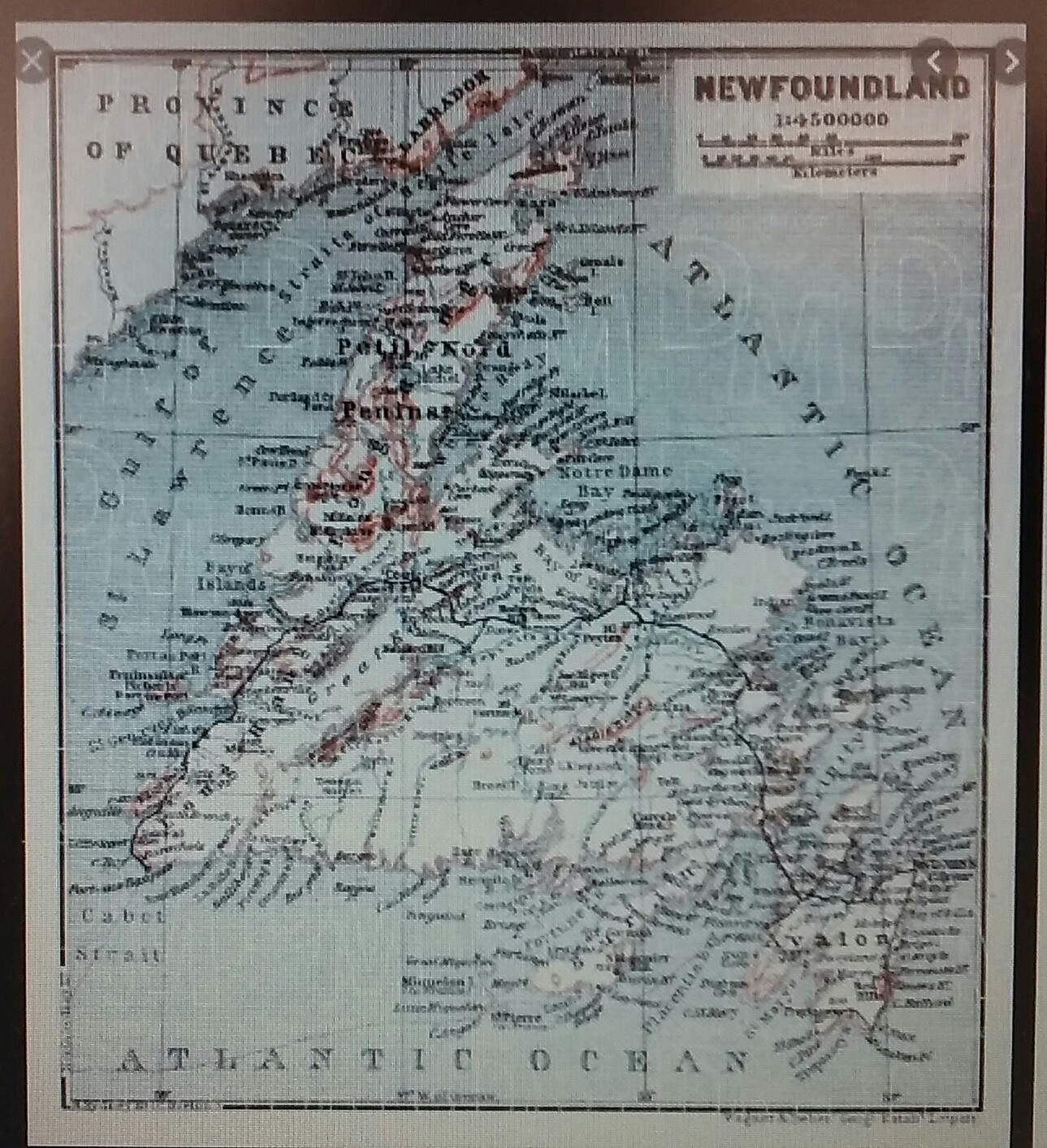
Fletts in Newfoundland Fisheries Venture 1907-1908

This blog has previously looked in some detail at the novel Bid for Fortune, by "J.S.[Joseph] Flett" (Moray Press, 1934), and in particular among other aspects at the ways in which its author drew on his experience of living in Canada, or more accurately Newfoundland, at that time a distinct 'colony' or dominion of Britain with its own government. But 1915 was not the first occasion on which he had made the transatlantic crossing in the interests of the family fishcuring business. Eight years previously, aged 19, he had been delegated to take responsibility for a pioneering attempt to transform the Newfoundland herring fishing industry, a venture which not only drew the attention of newspapers but involved government sanction and international repercussions.

Banffshire Advertiser, 9-5-1907, p.8

New Departures in Fishcuring
----------------
Local Workers off to Newfoundland 
---------------
Interesting Experiment
   Much local interest is evinced in a fishing experiment undertaken by Mr Alexander Flett, fishcurer, Buckie, Findochty, and Aberdeen, who has entered into a three years' agreement with the Government of Newfoundland* to carry on drift net fishing for herring and curing after the Scottish method in Newfoundland. This experiment differs from that of Mr Cowie of Lossiemouth, who is in the service of the Canadian Government, while Mr Flett's venture is in charge of Mr Joseph Flett, his son, who sailed in company with Mr G. Flett "Crawford" [nickname/tee-name], Findochty, on 9th April. Mr Flett has already shipped Buckie-made curing stock, and to-day the staff will leave here for Liverpool, whence they sail for Newfoundland on Saturday. [Details of those engaged: 3 fishermen, all Fletts from Findochty; 4 coopers, 3 from Buckie and one from Findochty; 6 (female) fishworkers, 3 surnamed Reid from Buckie, and 3 Mair from Portknockie, 'also three girls from Nairn'.] One of the stations to be opened up will be at Twillingate Island, Notre Dame Bay,. The output of cured herring for export from Newfoundland at present ranges from 100,000 to 200,000 barrels per annum, and everyone will join in wishing that success may crown the venture, so that new markets may be opened up and the present ones extended.
 * "Newfoundland was a British dominion from 1907 to 1934 when it surrendered dominion status by ending self-government..."

A slightly shorter story appeared in the Aberdeen Daily Journal (Press & Journal) 9-5-1907

The Newfoundland Herring Fisheries
The herring exports of Newfoundland at present total from 100,000 to 200,000 barrels annually, and with a view to increasing the output, the Newfoundland Government has - as briefly reported yesterday - concluded a three years' agreement with Mr Alexander Flett, fishcurer, Buckie, Findochty, and Aberdeen, to introduce into Newfoundland waters the Scottish method of catching herrings by drift net, and curing them as is done in this country. Mr Flett has already shipped salt and barrels and to-day a party leaves the Moray Firth shores for the Atlantic voyage. The venture is in charge of Mr Flett's son, Joseph...
Newfoundland in 1907
Four months later the 'P&J' returned to the topic, evidently quite a hot one in the context of a long-running dispute over access to fishing grounds involving diplomatic wrangling with the USA, In a column on 'The Newfoundland Fisheries' (under 'Sir Robert bond's Speech: American Opinion') the paper noted:

Aberdeen Daily Journal (Press & Journal) 12 September 1907 


Important Development
----------------
Agreement with Buckie Fish Curers
-------------
   The "Standard" says an arrangement has been entered into between the Newfoundland Government and Messrs Alexander Flett and Son, fishcurers, Buckie, Banffshire, to carry on herring fishing operations off Newfoundland upon the Scottish system. Whether the project will have any effect on the differences with the United States remains to be seen, but the experiment is to be tried in earnest. It is not a private speculation on the part of Messrs Flett. A formal agreement has been entered into between the Newfoundland Government and Messrs Flett and Son for three years to develop the herring fishing in the manner in which it is carried on upon the east coast of Scotland. A few months ago a number of fishermen, coopers and girls went out from the east coast of Scotland to train the Newfoundlanders in conducting the industry. It is understood that the Newfoundland Government have granted a substantial subsidy in order to give the venture a fair trial. There will be no curing at sea. The fish will be landed at convenient places, and cured in barrels both for home consumption and export. The advantage of the Scottish system is that Newfoundland will reap the full benefit from the fishing, and it is understood that there is an abundance of herring off the Newfoundland coast. The value of the herring fishing on the east coast of Scotland this year is estimated at £1,300,000 sterling, and it can be understood that to a fishing country like Newfoundland the adoption of fishing methods that bring in such a splendid harvest would be a matter of the highest importance. Naturally the Messrs Flett are very reticent on the matter, but they are very hopeful of success, and a member of the firm has gone out to superintend the operation.
-------------------------------------

Unfortunately the hopes of success were looking rather forlorn within less than a year.

26 March 1908 - Banffshire Advertiser

Newfoundland Herring Fishing Experiment Reported a Failure
Some time ago, Messrs Alexander Flett & Company, fishcurers, Buckie, sent out a representative and workpeople to Newfoundland by arrangement with the Government. St. John's " Evening Chronicle " contained the following reference hereto:-  
  We understand that Mr Flett, the Scottish herring packer, who is described by the "Herald" as having the profoundest faith in the future of the herring industry in the island, but is alleged by Captain Eli Dawe to have lost 26,000 dollars in the venture here, is reported in Government circles to be desirous of leaving the Colony and abandoning the venture entirely, if he can induce the Government to recoup him for the outlay he has made in the drift-net fishing so far. This would include the Schooners, outfits and gear he provided, and it is held on behalf of Mr Flett that it would be cheaper for the Government to do this than to continue the project for another two years and pay out 5000 dollars each year as a subsidy to him, which will have to be done in the event of no arrangement being now arrived at. Probably outside of a comic opera there is nothing to equal the Government's bungling with this drift-net project... [Details of false starts and failed arrangements since 1905] ... Now, after a season's trial in Green Bay, it is found that he caught just twelve barrels of herring in the outer waters, and for this the Colony has to pay him 5000 dollars.
=================
Neither family tradition nor public records so far discovered give the full story of how and when the 'venture' ended; it may have been affected by a 'modus vivendi' accommodating US demands with regard to the Newfoundland Fisheries (reported in the Press & Journal 14-8-1908). Whatever its losses, however, the firm survived and was evidently sufficiently well regarded and prosperous for a renewed attempt to establish itself in the 'Colony' to appear a reasonable proposition in 1915. This time Joe as its representative stayed for nearly six years, and it was the death of his father Alexander which brought him and his young family back to north-east Scotland in 1921.
Record of Joe's voyage out in 1907 (last name in the second column)


Monday, 9 September 2013

An Island Community and a World at War


            Around the Peat-Fire
, by Calum Smith (Edinburgh, Birlinn, 2001; "Anthology" Edition [with additional essays] 2010), is a memoir which crosses boundaries between personal, local and national history, illuminating all three. First published when its author was nearly 90, it is the story of and stories from the first three decades of his life, almost all of which he spent on the Isle of Lewis in the Outer Hebrides.
Obviously it was not only in the Western Isles that the early twentieth century brought massive changes in the way of life, but there were specific local features: transition in Calum's case linguistically and culturally as well as physically and geographically, from a Gaelic-speaking home and early environment in the west of the island, to the English-medium education system and the predominantly English-speaking town of Stornoway, and other zones of interaction with the wider world. Constrained by pressure on the land and the complications of tenure and inheritance, the crofting family moved to the outskirts of Stornoway, and eventually into it. He conveys the reality of rural poverty, along with the mitigating circumstances that made it bearable, such as the freedom of the open air, the network of mutual support, and the informal entertainments. For some education was the route to a different life, but after a spell at Glasgow University Calum, having turned down a chance to be a Labour candidate, returned to Lewis and spent some time doing odd jobs while 'unemployed' like so many of his contemporaries and fellow islanders - the depression hit hard, exacerbated by the post-war decline of the formerly flourishing herring fishing industry - ending up in the late 1930s as an employee of the local Labour Exchange, the 'Burroo' (Bureau of Employment).
He does not speak for others, but having good verbal recall enables the reader to 'hear' them speaking for themselves in quotations, often at some length, almost as if taking their turn to hold the floor or ‘yarn’ at a ceilidh. There are some areas of reticence: we do not have explicit pronouncements on issues like gender relations, for example, but have the means through his observation to draw certain inferences, one being the clear demarcation of tasks combined with shared responsibilities within a strongly patriarchal society that was nevertheless more nuanced in this respect than might be assumed. It was part of the writer's aim to celebrate and commemorate the people and places he had known (including some who did not survive very long to record their own testimony – several allusions to young men are tagged with a note of how they died in the Second World War), during that past time which he was conscious, as he wrote, of being one of the few to remember.
That he succeeded well is perhaps best illustrated by the book’s favourable reception, not just in terms of sales and reviews, but through the many appreciative letters he received from readers - Lewis men and women, their descendants, and people from other parts of the world in whom it had aroused often emotional reactions and recollections. More formal recognition was forthcoming too, especially in the glowing short review in the West Highland Free Press (28 December 2001) by Roger Hutchinson, who later paid it the tribute of referring to it repeatedly throughout one of his own books, The Soap Man (Edinburgh, Birlinn, 2003), to illustrate his narrative as a recurring motif, i.e. what was happening to an island family during the period he was describing. One of the things that most impressed Roger Hutchinson about Around the Peat-fire was the third chapter, dealing with the shipwreck of the Iolaire on New Year's Day 1919.

View of Stornoway from the Iolaire memorial site, Holm
Though often spoken of as 'remote' or even 'on the edge of the world' the island’s inhabitants were far from isolated as regards world events. In more prosperous times there had been frequent contacts with Scandinavia, Russia and North America through the herring industry, which involved large-scale processing as well as catching the fish, while young Lewiswomen made up a substantial proportion of the seasonally migrant 'herring girls' who worked in ports around the Scottish and English coasts, as far away as Yarmouth. Calum's mother started work on the fish at the age of 14, and it was in Fraserburgh, north of Aberdeen, that she married Murdo Smith from a closely neighbouring village on the west coast of Lewis, who was one of the crew on a fishing boat there while she was working on the quay gutting herring. His (Calum's) eventual father-in-law, meanwhile, was on the other side of the fish-curing business, in a family firm (Flett’s) that would have employed women like his mother, until the business collapsed along with so many others in the 1920s and ‘30s.
There is a long tradition too of association between poverty-driven recruitment to the armed forces and the island. Casualties in the First World War were heavy: according to the Scottish historian T C Smout, from a population of 29,500 on the island, 6700 had joined the forces, and 1151 had died, about 17% of recruits. Many of them were in the Royal Naval Reserve (RNR), a popular choice of affiliation on Lewis because of the retainer it paid to those who joined, as described on pp.26-27 of the book. But the casualties did not end on 11 November 1918. On January 1st 1919, in the early hours of the morning, H.M.Yacht Iolaire struck rocks, the 'Beasts of Holm', near the entrance to Stornoway harbour, and sank with the loss of 205 men. Most of those on board were RNR ratings going home to villages around the island after years of war service. Among them was of Calum Smith's uncle John, who was not one of the 75 survivors. In the commemorative booklet on the disaster, Sea Sorrow, published by the Stornoway Gazette in 1959, he is listed as the first of nine from the village of Shawbost: John Smith, Deck hand, R.N.R., 11 South. The list of names shows between 1 and 23 lost from each of 35 villages, and the town, grouped in 4 parishes.
As well as expressing the shared sense of shock and grief, the Town Council two days later demanded the strictest investigation into all circumstances. The Admiralty found "Nothing to account for the disaster" in its initial Court of Enquiry; there were rumours, a desire for some sort of explanation, eventually a public enquiry. Although no-one was blamed, the situation prior to embarkation was described by James Shaw Grant, Editor of the Gazette in the mid 20th century, (Hub of My Universe, p.92) as a 'familiar story of chaos' at Kyle of Lochalsh, the mainland port, such as had occurred previously at the time of island servicemen's return from the Boer War, when the lack of organisation had led to protests. At the end of 1918 neither the Admiralty nor the War Office had made adequate provision for the numbers to be transported across the Minch. Some soldiers and civilians were carried on the regular ferry, the Sheila, which made the crossing safely, but the naval ratings were put on to the Iolaire, parent ship of Stornoway naval base, which had never previously entered that harbour in darkness.
It may scarcely be possible to exaggerate the impact of the tragedy at the time, with such pervasive bereavement, but the effect on second and third generations is more problematic. Apart from a poem of two, there was little obvious cultural or physical memorial in the immediate aftermath of  the tragedy, although as in so many other places a large war memorial for 1914-18 was erected on a hill overlooking the town - and of course there were gravestones. Certainly the Iolaire was not forgotten in the intervening years, but direct references to it were rather rare: to ‘place’ someone, e.g. 'His grandfather was drowned on the Iolaire', or when there was a question of going to the beach near the wreck site. The first specific monument was set up in 1959, and a plaque was added nearby in 2002 (in a ceremony including phrases that may have come from a reading of this book).
Historiography of the event remained scarce. It was possible for in-depth studies of communities on Lewis from an 'anthropological'; or 'ethnographical' perspective (admittedly not history per se), like those by Judith Ennew and Susan Parman, to make little or no reference to it. Apart from the Gazette publication, the first substantial historical account was Norman Malcolm Macdonald's Call Na h’Iolaire, 1978 (the main narrative is in Gaelic, with a useful shorter outline in English). The same author included the disaster as one of the themes running through his novel Portrona (2000). Nowadays indeed it seems to be a necessary point of reference in any book with a Lewis setting, whether fictional like The Dark Ship by Anne Macleod (2002), the third novel in PeterMay’s trilogy, or non-fiction documentary like Children of the Black House by Calum Ferguson (2003). Of course it is also an integral and inescapable part of the now flourishing local 'heritage industry', and it is featured on a number of websites.
It might be worth considering how this process of remembering and adjusting over decades compares with collective memory of other events in other places, perhaps in one instructive comparison would be with the massive explosion at Halifax, Nova Scotia, in December 1917. There may be a question too of how such intensely local, specific trauma fits with the shared experience of world war.
To return to the title and the book, the Iolaire is a significant chapter but does not dominate either the mood or the content of this collection of memories as a whole. It is with the outbreak of the Second World War that the author concludes: 'Never again would things be the same for any of us.' (p.167)   He was adamant that he had no wish to write about the Second World War, although he had a few anecdotes from his time in the Navy (like many others he signed on ‘HO’ - Hostilities Only), and numerous characters to remember in conversation.

Cover of the 2010 edition
Although this is attractively produced, a number of mostly minor errors escaped the proof-reading process. Since Calum Smith was always insistent on correct usage, they are noted below:

Page       [errors remaining/added 2010]       correction                                             reason   
22           casulaties                                               casualties                                               typo
89           could [...] got to school                       could [...] go [or get] to school          typo       
131         lan mo chinn                                         lann mo ceann                        ceann = head, lann = full up (rhyming)
172         foresight that […] doing for       foresight – that […] doing – for    [with no dashes sense is spoiled]
194 (and 222)       Oh ghia, sgadan saillte!       Oh ghea, sgadan saillt!                        as originally written/published
204         ‘new day’                                               ‘a new day’                                            as originally written/published
207         poll mònadh                                          poll-mònadh                                         as originally written/published
216         a vague Glasgowegian                        a vague Glaswegian                             correct term, as original    
220         said “the men of the village (population 600)...” and so on            extra <,said> added after ‘600’)
220-1     quadrupled – or divided, by four,    quadrupled – or divided by four,   extra comma spoils sense
222         sgaddan saillte –  salted herring       sgadan saillt –  salt herring                as originally written/published
222         -aich  (after 'Leòdhasach') should be in Italics to match                              font
222         Land of Eternal Youth                          Land of (Eternal) Youth         ‘eternal' is not in the Gaelic

Links:

Monument to the men lost on the Iolaire

Iolaire memorial plaque on stone at Holm

The “Beasts of Holm” on which the ship foundered