Showing posts with label Book review. Show all posts

Sunday, 29 April 2018

Cold War Crimes: More on Nuclear Tests


 - Book review -
“Over 50 years, the Western powers used the Pacific region as a laboratory for nuclear testing.”

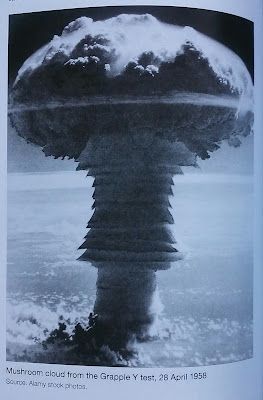
France was not of course the only or the first country to inflict damage on other places and peoples in the course of developing and testing nuclear weapons - and arguably far from the worst, although its resumption of the programme in the 1990s made it for a time the main focus of protests. 


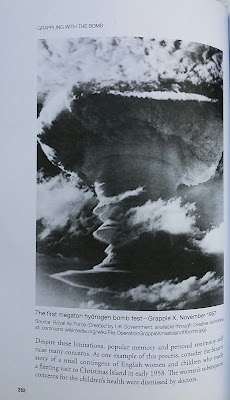
"Britain tested nuclear weapons in Oceania between 1952 and 1958. There were 12 atomic tests at the Monte Bello Islands, Maralinga and Emu Field in Australia (1952–57). These were followed by nine hydrogen and atomic bomb tests in 1957–58 at Malden Island and Christmas (Kiritimati) Island in the British Gilbert and Ellice Islands Colony (GEIC)—today the Republic of Kiribati." - Preliminary pages, p.xv in:


Nic Maclellan, Grappling with the Bomb: Britain’s Pacific H-Bomb Tests. (Pacific Series). Australian Nation University (ANU) Press, 2017. ISBN (print): 9781760461379/ ISBN (online): 9781760461386. 
Download free https://press.anu.edu.au/node/2626/download (5.0MB HTML, Mobile 5.8, epub 5.7.)  Buy Print $55 (£41.91 new via Amazon) 
An extraordinary and important new book published last year in Australia records, documents and comments on the devastating effects of what Britain did in the late 1950s on and to Malden Island and 'Christmas' (Kiritimati) Island in the Pacific.
See download for larger-scale maps
The book's structure is original, effective and readable, combining the best features of journalism (its author's profession), history writing and presentation of research findings. As the titles of its chapters indicate, it is first and foremost concerned with people, from the distant decision-makers to the all too close participants in the test, above all the large number who were adversely, often catastrophically affected by them.

This includes a wide variety of individuals and groups, among them some who tried to stop the tests and many who struggled for some semblance of justice in their aftermath. Here they often speak in their own voices, to an extent unusual in historical or scientific accounts, although not for the first time - interviews by Nic Maclennan with Pacific islanders were published in an earlier book, and much testimony has been recorded in the course of the long battle for 'compensation' to have their sufferings acknowledged. A major factor in hampering their quest, compounding the harm, has been the failure of the authorities to keep records of their exposure to radiation, or to destroy any that existed.
In each chapter, however, there is much more than biographical detail and anecdote. Memory, admittedly fallible, is supplemented by solid contextualisation and correlated with well-documented back-up evidence. For the non-scientist or non-historian, the relevant facts are presented in a straightforward, accessible way. The book begins with a time-line and glossary; 'interludes' expand on the key issues, and the extensive bibliography is helpfully arranged by subject (including American and French atomic tests) and type of material. And there are some striking and terrifying pictures.  

Sailors of the Fiji Royal Naval Volunteer Reserve, May 1957


On deck in readiness for the test: HMS Warrior
A campaigning work, it presents a comprehensive indictment of British government meanness, bad faith and abdication of responsibility for those whose world was taken over and whose lives were irrevocably damaged and shortened for the sake of preparing even more damage and destruction.     
As we mark the 60th anniversary of the Grapple tests in 2017–18, the issues of British nuclear weapons, indigenous rights and a nuclear-free and independent Pacific are still with us.

There are debates in the UK parliament about the cost of renewing Trident, the heart of the UK nuclear arsenal. Post-Brexit, Scottish nationalists are calling for a nuclear-free and independent Scotland as they move towards a second referendum on independence. The Republic of the Marshall Islands—unsuccessfully—has taken Britain and other nuclear weapons states to the International Court of Justice (ICJ) over their failure to meet disarmament obligations under the Nuclear Non-Proliferation Treaty. As a consequence, in February 2017 Britain withdraw from the compulsory jurisdiction of the ICJ on matters of nuclear disarmament, in order to halt further cases that threaten its nuclear arsenal.

Eight Pacific island countries co-sponsored the December 2016 UN General Assembly resolution to establish a treaty banning nuclear weapons, with negotiations amongst 130 governments commencing in March 2017. The South Australian Government is seeking to establish a nuclear waste dump on Aboriginal land, even as the Australian Government exports uranium to fuel nuclear reactors like Daichi Fukushima, which since 2011 has continued to contaminate the land and marine environment. Meanwhile the Tokyo Electric Power Company is wondering who will pay the horrendous price tag—US$160 billion and counting—to clean up the world’s latest nuclear sacrifice zone at Fukushima. The list goes on …

Even as some pundits call for an expansion of the nuclear industry to address the challenge of climate change, we have not addressed the costs and consequences of nuclear activities in the 1950s. As we enter a new era of uncertainty, following the Brexit referendum and the election of Donald J. Trump as US President, it is important to remember the tragedy of the nuclear era in the Pacific, so we are never forced to repeat it.

Moreover, it is time for the citizens of the United Kingdom to call on their government to do the right thing and address the legitimate claims of the Grapple survivors.

-   Introduction, p.16   
War Resisters' International pamphlet 1988
A longer and more academic review of Grappling with the Bomb is available online (June 2018). Journal: Medicine, Conflict and Survival, vol.34, no.2.
Link for e-prints (free for the first 50) here.

Saturday, 8 July 2017

Lives in the Lewis Landscape (and elsewhere): Book Review

Saints and Sinners: Tales of Lewis Lives, by Iain Smith with Joan Forrest. Stornoway, Acair, 2017. 180pp. £15. 25 illustrations.


'If there is a thread to the stories in “Saints and Sinners”, the authors have said, it is that they contribute something to an understanding of educational opportunity in late 19th and early 20th century Scotland.' Their method is to use stories, blended with analysis of developments and context based on thorough research in a variety of sources. The main title is not to be taken too literally; it would be stretching a point or two to ascribe either unblemished sanctity or lurid sinfulness to any of the protagonists, although they include examples of the devout – two who made religion their profession, and two who wished to - and the non-religious. The latter does not imply militant atheism but does extend to one ‘bleak description of Lewis religion’: "It regards art and beauty as lures of the devil or at best as profane pursuits unworthy of the seriousness of life."

Smith subverts one or two cherished myths, notably the one about a crofter's son having become Secretary of State for Scotland, which didn't happen, and makes good points about higher educational opportunities being more available to the better-off for a long time, as well as being unavailable to girls. The book is mostly about education (it is evident throughout that he knows this subject, and has a rooted knowledge of the island) with Chapter 4 relating the growth of the Nicolson Institute as a prestigious secondary school. Chapter 5, something of an exception – ‘An ordinary Shawbost family’ – uses family history to illustrate wider social changes across his parents' and grandparents' generations. These include: longevity; occupations; housing, domestic amenities; technology and utilities; the importance of fishing and crofting; and participation in the two world wars.

There are ten chapters, some co-written and revised from previously published versions, flanked by an introduction and conclusions (Ch.11), each ranging widely from its initial starting point, with many interconnections and by-ways. The stories and their sometimes surprising ramifications are, as the sub-title implies, about people. Individuals, most of whom may be characterised as outstanding beneficiaries, sometimes agents, of change in educational opportunity from the late 19th through to the early decades of the 20th century, take centre stage in turn, from a top civil servant and a headmaster, via academics and poets, a missionary, and an autodidact par excellence to a noted ‘Bohemian’ and friend of cultural celebrities. Inevitably the principal protagonists are male, a situation of which the authors are well aware. "The denial of opportunity to their female ancestors and indeed to many of their female contemporaries does not bear thinking about." (p.8)

Nevertheless the method of hunting up connections, including relations, means that if there was an index it would include several female names: the sister who first taught her autodidact brother his letters; the missionary’s mother-in-law (a daughter of explorer David Livingstone) who corresponded with Hans Christian Andersen; the single mother whose son became a Professor of Systematic Theology; the first Dux (Latin for 'leader', meaning top of the top class) of the Nicolson Institute who could not proceed to a degree, only to LLA (Lady Literate in Arts). Other benefits of the discursive but relevant style and collaborative method mean that, short though the book is, the reader is taken to different places, meets interesting people and learns something new about subjects that might not be expected from the overall theme.

At the same time, telling points are made and backed up by scrupulous research in a variety of sources, making this a real contribution to the history of Scottish education. ‘Formidable barriers of socio-economic status and gender’ were lowered thanks to innovations like bursaries and hostels, enabling ‘opportunities not afforded to earlier generations’. It was, however, ‘marginally wrong’ to assume ‘that such things would successively improve for each subsequent generation’. While ‘education as leading to social mobility can be overstated’ (p.169) it is taken to be undoubtedly a good thing, and its positive developments, while not unique to Lewis, are well exemplified there. Smith considers the Scottish school students of the 1950s and '60s ‘uniquely privileged’ but evidently sees hope in new online opportunities which mean that high achievers or the academically ambitious no longer need to go ‘away’ to have a chance of realising their potential.

Fraserburgh 1907:
The couple at the heart of the 'family' chapter
Golden Wedding:
Bain Square, Stornoway, 1957

P.S. This review should perhaps come with a declaration of interest. Not only has the Isle of Lewis been a recurrent theme on this blog*, so also has the writing of Calum Smith, author of Around the Peat-Fire (Edinburgh, Birlinn, 2001; 'Anthology' edition 2010) - a book mentioned in several footnotes and in the text by Iain Smith (Calum's nephew).


Tuesday, 29 March 2016

Then It Could Be Told: book review


The Secret State: Whitehall and the Cold War, by Peter Hennessy. Allen Lane, The Penguin Press, London, 2002, xxi + 234 pp. ISBN 0 713 99626 9.


   Even before it starts, this book plunges the reader into the nightmare world it investigates, with endpapers (at front and back, produced more fully on pp 164-8) listing ‘Probable nuclear targets in the United Kingdom: Assumptions for planning’.  This 1967 document of the Joint Intelligence Committee names 65 ‘targets related to nuclear strike capability’ and 20 major cities, in every part of the country, so we can see just how close the perceived threat came to home.  The text fills in the details of what it would have meant.
   Peter Hennessy displays 'The Cold War state which British insiders built alongside the existing one, from roughly 1947 onwards' (p. xiii) and which his researches and discoveries, in the Public Record Office (PRO) and among surviving participant insiders themselves, have brought to light.  The nuclear factor was, as he says, central throughout the period and as such it is the focus of his study, presented in six fact- and figure-packed chapters (and earlier summarised to an appreciative audience in the Penguin History Lectures 2001).  Some of the material will be familiar, in general terms at least, to those who lived through that era, especially if they tried to expose and oppose the machinations of the Cold War state.  For surviving participant outsiders there may be a certain grim satisfaction in being shown how right they were, not only on the major issue of the scale of nuclear devastation and how close to the brink of it we came, but about the activities of Special Branch - they were watching quite a lot of us - and Civil Defence - no doubt many volunteers meant well, but what a grotesque farce it was.  These and other accoutrements of the Secret State are exposed extensively, though not exhaustively. 
  Although the author remains a corridors-of-power man, relishing contacts in the upper echelons, the unguarded remark of the once-powerful, and the machinations of government at the highest level, he accords sympathetic attention to the activities and viewpoint of dissidents, highlighting for example the ‘Spies for Peace’ episode of Easter 1963.  For him the surprising thing is not that a Campaign for Nuclear Disarmament (CND) developed, but that it took so long, and he cites official statements and analyses which he considers would have kick-started it years earlier, if made known to the public.  In this context the Strath Report of 1955 was a primary source which was still closed to him at the time of writing but has since been opened by the PRO, perhaps thanks to his efforts in getting at and publishing its gist.  Those reviewers who have drawn the inference that after all nuclear deterrence ‘worked’ (and that CND was wrong) are ignoring quite a lot of the story.  As Hennessy notes: ‘It is simple to the point of being seriously misleading to suppose that the creation of a nuclear weapons capability on both sides of what became the Cold War… offers an all-embracing explanation of why the nuclear taboo has not been broken…’  (p.xi)  It is easier to answer the question ‘what if’ x number of bombs had been used (see Table) than ‘what if’ they had never been invented or had remained the monopoly of one country plus or minus its allies, although in the second case, at least a vast amount of money would have been saved.
   The title gives a slightly exaggerated idea of the book’s coverage, largely limited as it is to the nuclear-armed aspect of the Cold War and to certain departmental sources - probably the most significant with regard to policy-making - in Whitehall: the Cabinet Office (which alone covers a multitude of sins), the Prime Minister‘s Office, and Defence.  One way in which the work could usefully be built on would be by looking in more detail at manifestations and ramifications of their policies.  For example, further material is available on surveillance of the peace movement, Admiralty reactions to anti-Polaris demonstrations, and on the war-games exercises and detailed plans drawn up by practically all and sundry.  To dip one’s toes briefly into these last, murky waters: the Ministry of Agriculture, Fisheries and Food (MAFF), as well as conducting elaborate Atom Bomb Target Studies all over the country (PRO: [National Archives ref.] MAF 99/562 1952 etc.) was diligent in considering matters ranging from seed supplies in wartime to monitoring of farm produce for radioactive contamination in wartime, the effects of radiation on bull semen, and the slaughter of livestock following nuclear attack.  All departments were required to think about and prepare for the prospect.  The Ministry of Labour would, via a National Service Officer, direct any person in Great Britain to perform any service of which he ['or she' is implicit] was considered capable, restrict workers from leaving jobs, and so on.  Defence Regulations covered nursing, police, fire, merchant navy; certain other industries and services.  The Home Office excelled both in scaring scenarios and hilarious absurdities, with its much-satirised sixteen pages of Advice to the Householder.  ‘Public control after attack’ was the subject of special consideration; Civil Defence Wardens, and/or your local Street (Party) Leader, would coordinate the effort and should be obeyed.  Church bells were to be rung to signify fallout coming within one hour.  Housing and Local Government proposed arrangements for emergency sanitation and storing of water.  Under a dispersal policy ‘priority classes’ including pregnant women, children, and disabled, totalling about 9.5 million or 43% of the population, were to be moved from major centres to reception areas.  Even the Ministry of Pensions and National Assistance was ready at one stage, if there was a nuclear war, for the NA Scheme to be modified and known as the War Assistance Scheme.  An Index of Official Announcements on such matters was held in readiness for eventual broadcasting. 
   One finding that emerges from documents and interviews is that the state was not so monolithic, and did not present such a united front with its allies, as opponents often tend to assume. There are recurrent allusions to anxiety about the chances of US over-reaction to Soviet ‘provocation’, and the USA wais frequently portrayed as a threat to world peace (plus ça change), needing to be restrained by British reasonableness (well, perhaps some change there), for which British nuclear clout – ‘enough nuclear power to prevent foolish decisions to our detriment by the US’ (p. 62) – was seen to be required. 
   In spite of the end of the Cold War and its effects on international relations, the final chapter reminds us powerfully that this is far from being all over, past history in a supposedly, in some ways, more secure world.  Several nuclear bunkers may now be derelict or refurbished as tourist attractions, but the top people still have their bolt-hole and every British Prime Minister has to decide whether to authorise, for posthumous implementation, mass murder on an awesome scale.  Nuclear submarines carry sealed orders, ready in the event of that say-so to go and kill - whom? - when the rest of us are dead. 
  In spite of its subject, this is an entertaining and not an over-long or difficult read, with the bonus of sharing the author’s pleasure in his research, and triumph at finding the odd significant gem whose ‘sensitivity’ seems to have escaped notice, lurking in an obscure file.  While it is an excellent introduction, there are several areas in which the story could be expanded, and it is reasonable to hope is likely to be, with researchers taking an interest in the topic.  Many files are there to be explored and new ones being released all the time, so that more works of this quality and accessibility may be produced on Britain’s nuclear past, reaching as it does into our present and future.  
L.W.
First published in the journal Medicine, Conflict & Survival, 2003.

From inside the book's back cover
Extract from PRO file HO 226/71:
Casualties from a heavy nuclear attack on the United Kingdom  1958
HO Scientific Advisers’ Branch
 Casualty estimates for ground burst 10 Megaton bombs, Table1:
No. of Bombs
No. killed (no evacuation) 000s
5
7,479
10
12,216
20
17,735
30
21,051
40
23,487
45
24,884
 The comment is added that estimates are almost certainly too low.

Friday, 15 May 2015

For COs’ Day, May 15

A review of a book previously cited on this blog, with two others relevant to the same theme

David Boulton, Objection Overruled: Conscription and Conscience in the First World War. Dent, Cumbria, Dales Historical Monographs in Association with Friends Historical Society, 2014.
See also previous posts on COs in Ealing
CO on left in photo above: Frederick Bromberger (of Ealing)
David Boulton’s pioneering study of conscientious objectors (COs) in Britain in the First World War was published in 1967, “to ensure that war resisters would ‘not go unsung’”. Just over fifty years since the introduction of conscription in the UK, historians rarely paid serious attention to those who refused it, or to opponents of the war generally. A further half-century on, it is becoming more likely that writers on the period will at least refer to the fact that COs and other war resisters existed, albeit, according to the dominant narrative, as a tiny, eccentric and reviled minority. That dismissive view is open to challenge on all counts.
Boulton’s account is still probably the most comprehensive available, ranging from the pre-war prospects for internationalism, through initial reactions to the war, to the way conscription was introduced and how it was resisted. What happened to COs is described along with the dilemmas they faced (whether or not to accept various forms of “service”); there are harrowing details of what their decisions entailed, including accounts in their own words and those of their supporters, notably but not only in the No-Conscription Fellowship (N-CF). They were far from isolated in their stance: tribunal hearings and appeals were monitored, individual cases taken up, instances of particularly harsh treatment publicised, questions asked in Parliament, and dependants helped. As “pacifism became militant” resistance was organised on an impressive scale. When 35 men were sent to France and threatened with the death penalty, the resulting outcry ensured the sentences were commuted. A new Appendix discusses that episode, concluding that it was both “Conspiracy” and “Cock-up”, confusion and ineptitude combined with some elements conspiring to kill the peace movement by using the perceived ultimate deterrent. (p. xxxvi) 
Some COs did pay with their lives. An estimated 73 named as having died in direct consequence of their resistance and its punishment; prison doctors, some of whose subservience to military or prison authorities prevented them from mitigating patients’ hardships or even saving lives, were implicated in several fatal outcomes, through callousness or incompetence. A growing body of evidence of the worsening health of COs is cited as a major factor in contributing to agitation on their behalf, and a change in public attitudes towards them.
For many who survived, the ordeal did not end with the Armistice. COs remained in prison or might even be called up and (re-)arrested even while demobilisation was being got into gear. Punishment often stretched into post-war life, following “dishonourable discharge” (without pension rights), entailing social ostracism and barriers to employment.

Cyril Pearce, Comrades in Conscience: the Story of an English Community’s Opposition to the Great War. London, Francis Boutle, 2014.
 

Just what prevailing public attitudes to the war were is no longer a matter of such complacent certainty, thanks to recent work, notably that of Cyril Pearce, whose Register of British COs has been promised for more than a year “soon” to be made interactively available on-line via the Imperial War Museum [where is it?]*).
Pearce’s study of an English community’s opposition to the Great War, published in 2002 and now re-issued with new material and revisions, is focused on Huddersfield, a town which by 1917 had become “a virtual citadel for the anti-war cause”. (p.15) Unlike what is taken to have been the sequence of events in most places, the anti-war stance of the labour and socialist movement in Huddersfield survived the outbreak of war, and the local public mood, tinged with scepticism, was wary of jingoistic excess. The one recorded serious attempt to disrupt an anti-war meeting was spectacularly unsuccessful.
While outright anti-war activism remained a minority movement it benefited from being widely tolerated, Those who opposed the war often did so in no uncertain terms: Paddock Socialist Club denounced the “murderous gang of war-mongers responsible for the present European crisis” and the “efforts that are being made to involve this country in the bloody outrage on humanity.” (p.53) Although they are not all he considers, Pearce has thoroughly researched the identities, choices, and fates of COs in the area, making extensive use of press reports and organisational archives to show what can be done in the absence of Tribunal records. Almost all of the latter have been destroyed, the exceptions being those of the Middlesex Appeals Tribunal, and (in Scotland) of Lothian and Peebles, and the Isle of Lewis.
When conscription began in early 1916 it drew divergent local labour and leftwing elements back together, in the face of what was seen as “Prussianism”, i.e. the sort of militaristic society the war was supposed to be fighting against. Practical preparations were made and support systems put in place, including networks to help fugitives evade arrest. COs could become local heroes to crowds of demonstrators; a “collective/group consciousness” arose, embodied in an extensive and vigorous local organisation for Our Boys – in the sense of resisters not troops. (p.162) For many the question was not whether, but how far to resist, and what compromises, if any, to accept.
“Work of national importance” here could mean workers staying in the jobs they already had or being directed to similarly “essential” work (textiles, dye-works, chemicals) in the area, to which COs from elsewhere were also sent, contributing to its balance of dissident opinion. By November 1918 the anti-war movement in the town is said to have been more united than ever. At the same time the threat of industrial conscription was a further focus of resistance, and labour struggles continued unabated. “As the war progressed it became seen as part of an inevitable process of depriving workers of their already limited freedoms and of harnessing them more thoroughly and repressively to the needs of capital.” (p.194) Others, however, were motivated rather by revulsion at violence, especially killing, and at the denial of individual freedom that was a concomitant of war and militarism. In Huddersfield, Pearce contends, the matter was not only a private and personal one but a public issue bound up with multiple issues of ordinary life. The question remains, as posed at the end, “not why there was so much opposition here, but why there was so little elsewhere.”

Conscription was presented as un-British until the government decided it was necessary

Or was there..?

Alison Ronan, A Small Vital Flame: Anti-war Women in NW England 1914-1918, Manchester, Scholars’ Press, 2014.
Alison Ronan’s book is a good example of further research already under way, indicating that in at least one other part of the country there was more widespread and varied opposition to the war than conventional historical narratives have tended to acknowledge. She focuses on the even more neglected subject of women’s contribution in this area. While Boulton and Pearce each make some mention of women’s roles, in the context of the No-Conscription Fellowship and of informal, family support networks respectively, these account for only a few pages in their works; David Boulton points out this “glaring omission” himself, and supplies some sources to atone for it, in his new Introduction (pp.xviii-xix).
Using research methods avowedly influenced by a feminist historical analysis, Alison Ronan aims to examine “women’s motivation and decision to become visible opponents of war, both at an individual and organisational level”. (p.10) The organisations explored in detail are: Manchester and Salford Women’s War Interests Committee, 1915-1917; the Women’s International League (for Peace and Freedom) 1915-1918; branches of the Union of Democratic Control, the Fellowship of Reconciliation, the No-Conscription Fellowship, and the Workers’ Suffrage Federation, 1916-1918; and (a particularly rewarding subject) the Women’s Peace Crusade, Manchester, 1917. Perhaps it is inevitable that the focus should be on organisations, since they kept records which survive, but the approach is far from bureaucratic, always attending to personalities and informal interactions. Anyway they are overdue for and repay attention, as illustrated in the case of the Women’s Peace Crusade:
p.259  The Women’s Peace Crusade was extraordinary. It spread like wildfire across industrial cities in England, Wales, Scotland and Ireland during 1917 and 1918. It was unambiguously anti-militarist, feminist, internationalist and socialist, explicitly recruiting support from women in working-class communities across the country.-261 [Yet generally unremembered] perhaps because the series of demonstrations were co-ordinated by local, ordinary working-class women or perhaps because its spontaneous energy was not organised through formal committees nor generally recorded in minutes of meetings and so little documentation has survived. (note 4)  # [The leaflets] were handed out in the door-to-door campaign or at the public meetings and were carefully drafted to appeal to the working-class woman... full of housekeeping metaphors and easily recognised wartime tropes of grieving wives and mothers. They also offered a ‘commonsense’ approach to the political issue of international peace and the negotiation of a just settlement.  -262 The Crusade was against the war, its principal demands focusing on an immediate, negotiated peace settlement. Originating in Glasgow, it used the organisational strategies of local women who had led the women-led rent strikes in 1915. (note 8)  -265 The Crusade lulled during the winter of 1916 and re-emerged throughout 1917 particularly after the Russian revolution in March and during 1918 when peace was on the horizon after the entry of the USA into the war. [Highlighting added]
In addition, there are chapters on women in progressive organisations in the two years preceding the war, and on wartime friendships and alliances between suffragist, pacifist and socialist women. Throughout, the conditions and hardships of everyday life are emphasised: shortages of food and fuel, restrictions and surveillance, threats to women’s personal liberty. The sense of reality and immediacy is enhanced by a few effective illustrations, posters or leaflets from campaigns and photographs of groups with a shared purpose. While women were clearly not subject to the same dilemmas and penalties as men liable to call-up, to be identified as an anti-war campaigner required considerable courage, which was not lacking, sustained by networks across generations and overlapping affiliations.
“Belonging to any anti-war group politicised women, because of the simultaneous explorations of the economic, political and the gendered aspects of war.” (p.219) “This was the pivotal issue for the anti-war women across the country and in Manchester: to determine how ordinary women, without apolitical voice, could affect the outcome of a war and thereby ensure a permanent, just and international peace.” (p.10)
There is a certain amount of repetition – and a tendency throughout to follow the traditional lecturers’ advice, to “Tell them what you’re going to say, say it, then tell them what you’ve said”, but given that few readers will have any familiarity with the material, this is probably all to the good. Certainly the key points are worth emphasising.
p.136  The disturbance to everyday life was immediate and the critical issues for local working-class women were the threat to their family life, their employment and the supply of food and fuel.            p.138  Very quickly, the surveillance of working women asking for relief and the relation of surveillance to the stoppage of the new sailors’ and soldiers’ allowances, began to raise questions about the potential wartime threats to women’s personal liberty.
p.230  By the first winter of the war, there was a local network of people in Manchester who were prepared to come together to protest against the threat of conscription.  -233 Many local meetings held by different organisations which were critical of the war were not even being reported in the ‘liberal’ Manchester Guardian. -235 Pamphlets and leaflets began to circulate more widely throughout the city because of the local risks of holding anti-war meetings. -236 The irony of surveillance and censorship was that it strengthened local resistance. 
Ronan concludes, like Pearce, with the idea that other places may have similar hidden histories to be discovered and the implicit hope that other studies may follow, modestly describing her work – which is further enhanced by an extensive bibliography – as revealing only “a small part of a much larger, still largely undiscovered, jigsaw of resistance to war and the demand for a just and negotiated peace made by women anti-war activists in the First World War.” (p.332)
Together or separately, these three books present a formidable challenge to the dominant warmongering ideology and mainstream historical view of an overwhelmingly pro-war consensus.
L.W.

[A non-identical version of this combined review in Medicine, Conflict & Survival Vol. 30, no. 4, 2014, should be available at http://www.tandf.co.uk/journals/mcs]

* The question about the Pearce Register has been partially answered, insofar as
"The records of COs compiled by Cyril Pearce are now online via the Imperial War Museum: https://search.livesofthefirstworldwar.org/search/world-records/conscientious-objectors-register-1914-1918 "

 But disappointingly 
The website is not all that was hoped, in particular: 
"One is obliged to register to see the individuals' records. Downloading the data appears to be impossible. Searching the data is clumsy at best; search by location doesn't work if you are not searching on a name as well. Best results are got by using the 'keywords' search at the bottom left side..."

However:
If you have a name you can view and copy a transcription of the record, after signing up (free). 

Sunday, 8 June 2014

Pawns in the War Game, 1940

Book Review [Edited and slightly expanded from draft of a review published in Medicine & War (later Medicine, Conflict & Survival)]
Churchill's Sacrifice of the Highland Division: France 1940, by Saul David. Brassey's, London, 1994, xii + 276 pp.

Early in 1940 the 51st (Highland) Division was sent to France as part of the British Expeditionary Force (BEF); within six months more than 11,000 of its men were taken prisoner, 1000 killed, and 4000 wounded; only 5300 were successfully rescued and evacuated. The bare facts are soon told, but Saul David gives us a fuller story, often in the words of those who took part - almost everything, at times literally blow-by-blow, that happened to the Division from its arrival, under-equipped, ill-prepared, and largely unwelcome, through resistance to the German advance in the Saar and on the Somme, to the final debacle of encirclement and surrender. While some of the military detail may appear repetitive to those not primarily interested in that aspect, there are narratives of participants on the ground, interspersed with brief statements of what the politicians and military leaders on both sides of the Channel, whose decisions affected their survival, were doing and saying.

The viewpoint is British, but there is a sub-text of interactions with and attitudes to the French. Such  attitudes and interactions could be complex and ambivalent: if the Scottish soldiers expected to be greeted as heroes and saviours, they were disappointed. ‘In strong contrast to the ecstatic welcome given to the arriving troops of the BEF [British Expeditionary Force] in 1914, the war-weary French were no more than lukewarm in their greetings. (p.6, in Chapter 1, 'No Heroes Welcome’). As the author reminds us, there was of course a legacy of pervasive war-weariness and anti-war sentiment among the French from the experiences of 1914-18. Conversely, one would guess at a certain culture shock experienced by recruits from close-knit Scottish Highland communities. There was apparently little fraternisation, either organised or spontaneous, although at least one wild night is recorded in the early days. At another level complaints occurred, as is customary between allies, about the ‘others’ not pulling their weight.

As a way of telling war like it was, the book certainly has interest, but will probably hold few surprises for readers familiar with the recurrent features (near clichés by now) of warfare narratives: confusion, irrationality, discomfort, incompetence, as well as comradeship, often pointless heroism and occasional 'decency' between enemies (e.g. in treatment of the wounded). If this sounds old-fashioned it conveys an impression made by the book; the author does not deny the horrors of war, but they come over as curiously sanitised. Perhaps the various narrators in retrospect rationalised their own experiences to some extent.

Analysis and comment are on the whole rather minimal, although David clearly endorses the assertion in the title, that there was a political decision, a result of `unsavoury horsetrading' between the French and British governments, to leave the 51st in France with the aim of keeping that country in the war, long after the situation had become obviously hopeless, and that aim unrealistic. Eventually, in the brief Chapter 14 (3 pages, `Sacrificed for Nothing'), he spells out the point that has already emerged - that Churchill himself must bear a large measure of the responsibility - and considers it `not out of the question' that the waste of life was deliberate, a calculated loss of expendable pawns incurred on grounds of dubious expediency. An Epilogue reinforces this conclusion, but ends on an upbeat note with the description of several successful escapes, and of the reconstituted 51st 'liberating' in 1944 the town which had been the scene of its destruction. 

Many questions are left untackled, including those in the area of war prevention. Although some conventional attitudes are implicitly challenged, long-term consequences of war for individuals and society are not spelt out. Effects on the close-knit Highland communities which produced the recruits are mentioned only in passing, and any psychiatric sequelae for the soldiers whose tales are told remain undisclosed and unexplored. Instead, the reader may discern a kind of nostalgia suggesting that wars aren't what they were, and a measure of reluctance to offend those who contributed their memories. Nevertheless, this is at the very least a useful source book for a significant episode in the history of the Second World War, and comes complete with illustrations, maps, bibliography, notes, glossary and index. Saul David is described as a writer of `vernacular military history' and it will be interesting to see what he makes of his next topic, the mutiny at Salerno, when presumably the rejection of war ideology will loom larger.

Photograph from SY Gone By no.48, summer 2017, p.7:
includes several of those captured at St.Valéry

"St..Valéry" in floral display at Inverness Castle, autumn 2017
(see Comment below).

Inverness, the Highland capital, also has a Park and Avenue named for the French town.