Showing posts with label Scottish history. Show all posts

Saturday, 21 September 2019

Remembering 1919 on the Isle of Lewis

Related news story, BBC Scotland, 21-9-19

How war was followed by land raids in Scotland

When the war ended, many soldiers and sailors from the Highlands and Islands returned home believing they had been promised land as a reward for their service on the frontline.
They had expected to use the land to build homes, grow crops and raise livestock to feed their families.
But when they found this was not available to them as promised, they carried out raids to take control of areas of large estates.[...]


Forthcoming Conference

University of the Highlands and Islands (UHI) Centre for History

Celebration of The 1919 Land Settlement (Scotland) Act
Isle of Lewis, 26 - 28 September 2019
"...Opening with a celebratory dinner the event will explore the significance and legacy of the 1919 Act through talks, posters, displays and field trips. The event will show that this was not an isolated response to war and changing times but was part of a global impetus aimed at the restoration of a sense of balance in social relations around land and land ownership.
Registration and field trips are made free by generous support from the Centre for Scotland’s Land Futures and the Historical Geography Research Group. The celebratory dinner will be charged at £25 - £30 per head."

Thursday 26 (Stornoway), 
Friday 27 and Saturday 28 September 2019 (Balallan)
Programme
Thursday 26th September, Stornoway (location TBC)
5:00pm – Registration opens
6:15 – Welcome to the conference and official opening
6:30 – Keynote - Professor James Hunter (UHI)
7:30 – Conference dinner
Friday 27th September, Kinloch Historical Society, Balallan
8:45am – Registration for those unable to attend on the previous day
9:15 – Panel 1: International Perspectives on land settlement (Chair: Dr Iain Robertson (UHI))
Andrew Newby (Tampere University, Finland) - “A violent decimation of landlord power”: Denmark’s Lensafløsningsloven of 1919 – A Centenary Appraisal
Roy Jones and Tod Jones (Curtin University, Australia) - "Antipodean aftershocks: World War 1, the 1919 Land Act and land (un)fit for heroes at the (other) end of the world
Barbara Arneil (University of British Columbia, Canada) - The Small Holdings Colonies Acts (1916 and 1918)
10:30 – Coffee
11:00 – Panel 2: Contemporary Perspectives and Legacy (Chair: Dr Micky Gibbard (Dundee University))
Helen Barton (UHI) - We express our Deepest Regret…
Seonaid McDonald (Archivist, Tasglann nan Eilean, Comhairle nan Eilean Siar) - What the local government archive sources tell us (or don’t?) about the land struggles
11:45 – Keynote - Professor Ewen Cameron (University of Edinburgh), (Introduction and chair: Dr Anne Tindley (Newcastle University))
12:45pm – Lunch
1:30 – Trip to West Harris with the West Harris Trust
Three stops along the route between Balallan and Talla na Mara to look at community landownership, tour of Luskentyre until 4pm. Go to Talla na mara to visit café and look at exhibition, return to Balallan approximately 5:30pm.
Saturday 28th September, Kinloch Historical Society, Balallan
9:00am – Open
9:15 – Panel 3: Local Histories of Land Settlement (Chair: Professor James Hunter (UHI))
Malcolm Bangor-Jones (Independent Researcher) - The resettlement of Syre in Strathnaver by the CBD in the 1900s
Neil Bruce (UHI) - “Storm in a quaich”: the Uist Rocket Range, the crofters and the priest
Colin Tucker (Comann Eachdraidh Sgìre a’ Bhac) - There is only one home: that little house with its few acres of land in Eilean Leodhais
10:30 – Coffee
11:00 – Panel 4: Thinking around Land Reform (Chair: Professor Ewen Cameron (University of Edinburgh))
Mairi Stewart (Independent Researcher) - The planting of forest workers on the land is a more anxious … business than the planting of new trees: the 1919 Forestry Act and land settlement in Scotland
Lindsay Blair (UHI) - ‘Mutations from below’: An Sùileachan (2013) and The Land Raiders of Reef
Iain Mackinnon (Coventry University) - The role of historicism in accounts of land reform in modern Scotland
Rob McMorran (SCRU) - Current pathways to community ownership in Scotland and their effectiveness is supporting continued expansion of the Sector in the 21st Century
12:30pm – Lunch19
1:30 – Talk from John Randall (Comunn Eachdraidh na Pairc) on South Lochs
2:00 – Trip to the South Lochs with John Randall (return around 5pm)
5:00 – Closing remarks
For more information contact enquiries@scotlandslandfutures.org

Land Raiders' Cairn, Gress, Isle of Lewis
==================
Extract  from 'As I See It' column by 'M.S.', Stornoway Gazette, 23-12-1955, addressing the somewhat different question of 'squatters and plot-holders' in the  post-Second World War context:
   It was of course the first world war that started it on a big scale.The returned warriors, especially the younger sons who were landless, tired of "roaming with a hungry heart" and wanted nothing more than to settle down on their native heath; and that is what many of them did. They staked their claims in common ground and were not to be gainsaid by stay-at-homes; and although their actions were watched by jealous and resentful eyes in some instances, they felt that they had fought for their privileges and - what impressed those who would oppose them - they looked as if they were prepared to do a lot more fighting. Furthermore they had many ex-servicemen friends among the crofters too...
  And so on the common pastures of almost all the townships of these islands the squatters established themselves, many of them doing really excellent work with the unpromising materials on which they started. Taking over laud which had produced nothing since the peat was skinned from it but heather, moss and poor-quality grass, they dug it up, trenched it, worked it into productive agricultural units which are today, in some cases, producing far more than the neighbouring crofts.
   ... "The genius raids - the common people occupy and possess" [T E Lawrence, Letter to Robert Graves,1935]. And the common people who occupied and possessed the barren land and made it fertile, who built houses and grew good crops by their own labours, who made oases where there were deserts, will leave the abiding earth the richer for their passing through it.


Monday, 14 May 2018

Looking back to 1916 from COs' Day 2018

For International Conscientious Objectors' Day, 15 May
A day in the implementation of the Military Service Act
as reported in The Scotsman, 10 June 1916, p.8, cols. 6-7

When newspapers had pages full of news...
Amongst the war news reported on the 10th of June in The Scotsman (Edinburgh) there are several reports about reactions and resistance to conscription, introduced nationally in the Military Service Acts of 1916 (January and May). One of these features Dr John MacCallum, mentioned previously in a review of Robert Duncan's Objectors and Resisters and more extensively in a subsequent post.

Transcription: 
ARGYLLSHIRE ASSISTANT MEDICAL OFFICER
_______________
FINED AS AN ABSEBTEE
In Oban Sheriff Court yesterday – before Sheriff Substitute Wallace – John Cameron MacCallum, M.B., Ch.B., Muckairn Manse, Taynuilt, recently Executive Tuberculosis Officer and Assistant Medical Officer for the Country of Argyll, appeared on a charge that, having been deemed to have been enlisted and transferred to the Army Reserve under the Military Service Act, and having on 13th may been called up from the Reserve for service, he failed to report himself at Stirling Castle on 30th May in accordance with the requirements of the notice served on him.
The accused pleaded not guilty.
In reply to the Sheriff-Substitute, he admitted a breach of the statute, but, in view of the conscientious objections which he held to participating in war service in any capacity, he maintained he could tender no other plea than that of not guilty. He acknowledged that he had not received a certificate for exemption as a conscientious objector, although he had applied for one.
Formal evidence having been led by the Procurator-Fiscal, the Sheriff-Substitute convicted the accused, and sentenced him to pay a fine of £2, or one week’s imprisonment. 
On leaving the dock, Dr MacCallum was taken into custody by a military escort.
 - The Scotsman, Saturday June 10, 1916, p.8, col.6-7. Military Service: Labour and Recruiting
Dr MacCallum was of course not alone in his stand, as shown in the next two reports.
Further details on most of the other COs listed can be found at:
https://search.livesofthefirstworldwar.org/search/world-records/conscientious-objectors-register-1914-1918.
As is also well know and well documented, all was not quiescent on the labour front either - not only on 'Red' Clydeside.

The same columns contain brief notices of how conscription was affecting essential work (‘agricultural labour’, ‘female labour in bakeries’, and ‘Fife colliery’), and several industrial disputes: Edinburgh corporation workers wanting an increase in wages; Edinburgh painters rumoured to be nearing a settlement after 11 weeks; and Dundee calender [sic*] workers back to work after 3 months on strike with an expectation of having their claim considered. Not to mention Galsgow muntions workers and the vexed question of postponing the traditional ‘Glasgow Fair’ annual holidays, in the national interest of course.
Calender Girls?
(There were many women working in the jute industry in Dundee even before the war)
*CALENDERER / CALENDERMAN / CALENDER WORKER - operated a machine which pressed using two large rollers (calender) used to press and finish fabrics or paper. - Answer to an online query.

The official labour and trade union movement of course supported the war...but not unanimously.

Finally, column 8 on the same page under the heading Biographical Notes records the sad fate of many of those who had gone to the war. The whole page can be seen as a pdf.      


Sections of CO group photographs, as featured on the cover of
Voices from War and Some Labour Struggles (Edinburgh, Mercat Press, 1995), ed. Ian MacDougall
(no picture credits given other than for the cover design as a whole).

For more events on 15th May see Peace Pledge Union:

And a related news story from Edinburgh, 15-5-2018:
------------------------------------
POSTSCRIPT:
Another small part of the story, this time from Aberdeen -
National Council Against Conscription (Aberdeen) (1916) 
"During World War One, the National Council Against Conscription was established in response to the Military Service Bills of 1916, which introduced conscription for men between 18 and 40. The Council opposed conscription as an infringement on civil liberties and campaigned against the bill seeking to stop it passing through Parliament. The Council was one of many groups operating at the time, such as The No-Conscription Fellowship, and these groups monitored the work of the military tribunals and gave advice to the men who appeared before them. The Council changed its name in 1916 to The National Council for Civil Liberties (n.b. there was another organisation with the same
name from the early 1930s and which became Liberty, as it is known today).
"There was a branch in Aberdeen and William Davidson, a stores porter, Vice President of the Aberdeen Independent Labour Party, was secretary.
"References: Conscientious Objectors Register 1914 – 1918 at Imperial War Museum website (record of William Davidson)."

Thursday, 14 December 2017

More Scottish COs: Campbeltown, Islay, Arran

The two men from Lochgilphead, Duncan Macdonald and Duncan Campbell McTavish, whose cases came up in the preceding post, were not the only First World War conscientious objectors (COs) in the rural south-west of Scotland. There were at least half a dozen more, from quite close by, whose paths may have crossed with theirs.


Dr John MacCallum is the best known to historians, and has already been referred to on this blog. Without repeating his story here, it is worth noting his Argyllshire connections. As well as being described as "TB officer" for that county, he was a son of the (Church of Scotland) manse, to wit Muckairn Manse, Taynuilt, now a Category B listed building.

It is tempting to conclude that Peter Sim from the Isle of Arran was the same person as P Simm from Arran, but if the latter's meagre record is accurate this may not be the case. Peter Sim was sentenced at Court Martial to 112 days in Wormwood Scrubs and arrested as an absentee, then sent to Wakefield work centre under the Home Office Scheme (HOS) for alternative service. "P Simm", on the other hand, is described as an Absolutist and must have refused or come off the HOS since he had served 3 sentences by January 1919... (Maybe he thought better of going along with the HOS, or absconded from Wakefield?)

Peter Sim
Age        -
Birth year            -
Year       -
Soldier Number                -
Address               -
Address 2            Isle of Arran
Local authority  Arran County District
County Buteshire
Country                Scotland
Latitude               -
Longitude            -
Ordnance Survey reference        -
Motivation          -
War Service        CM (Court Martial) Perth 14.9.16 - 112 days HL (With hard labour), to Wormwood S.
Magistrates Court            Arrest reported 19.9.16
Magistrates Court comments     Absentee
Prison   Wormwood S.
Work Centre      HOS (The Home Office Scheme, administered by the Brace Committee) to Wakefield
WO363 false
Sources                NCF (No-Conscription Fellowship)/COIB Report XLV; FH/SER/VOPC/Cases/7(2549) 
Record set          Conscientious Objectors' Register 1914-1918

P Simm
Age        -
Birth year            -
Year       -
Soldier Number                -
Address               -
Address 2            Arran
Local authority  Arran County District
County Buteshire
Country                Scotland
Latitude               -
Longitude            -
Ordnance Survey reference        -
Absolutist            Yes
Motivation          -
War Service        ?
Prison   By Jan.1919 had served 3 sentences (1 month furlough) and more than two years.
WO363 false
Sources                FH/FSC(1916/20)/SER3-Two Year Men;
Record set          Conscientious Objectors' Register 1914-1918

The island of Islay also produced a pair of COs, for one of whom a WO363 record is available.

John McFadyen, a ploughman aged 24 and 5'2" tall in 1916, was granted ECS and duly joined the NCC at Stirling Castle, serving without recorded incident until demob on 22-7-19.

John McFadyen
Marital status    Single
Occupation         Ploughman
Age        24
Birth year            1892
Year       1916
Soldier Number                1331
Address               Coullabus
Address 2            Gruinart
Local authority  Islay County District
County Argyllshire
Country                Scotland
Latitude               55.76
Longitude            -6.23
Ordnance Survey reference        NR348608
Motivation          -
Military Service Tribunal                MST (Military Service Tribunal) (?) - ECS (Exemption from Combatant Service)
War Service        NCC (Non-Combatant Corps) 16.6.16 Stirling Castle, (2 Scottish); Home: 16,6,16 - 22.7.19, Demob.
WO363 true
Sources                NA/WO363 - on line 
Record set          Conscientious Objectors' Register 1914-1918

John Mcfadyen
Age        24
Birth year            1892
Service number                1331
Regiment            Non-Combatant Corps
Unit / Battalion 3rd Scottish Company
Year       1916
Residence town               Galashiels
Residence county            Selkirkshire
Residence country          Scotland
Series    WO 363
Series description            WO 363 - First World War Service Records 'Burnt Documents'
Archive The National Archives
Record set          British Army Service Records
Category              Military, armed forces & conflict

John Mcfadyen
Age        24
Birth year            -
Service number                1331
Regiment            Non-Combatant Corps
Unit / Battalion 3rd Battalion
Year       1915
Series    WO 363
Series description            WO 363 - First World War Service Records 'Burnt Documents'
Archive The National Archives
Record set          British Army Service Records
Category              Military, armed forces & conflict

John Bell, a sawyer, was granted temporary exemption during June 1916, then ECS when his appeal at county level was dismissed. The only source given is one which would repay further study. It is quoted as if suggesting Bell has somehow managed to dodge the draft for the best part of two years:

John Bell
Occupation         Sawyer
Age        -
Birth year            -
Year       -
Soldier Number                -
Address               Lyrabus
Address 2            Islay
Local authority  Islay County District
County Argyllshire
Country                Scotland
Latitude               55.76
Longitude            -6.23
Ordnance Survey reference        NR348608
Motivation          -
Military Service Tribunal                MST (Military Service Tribunal) Islay Local 9.6.16 - temporary exemption to 30.6.16; County appeal rejected - ECS (Exemption from Combatant Service) only, non-combatant
War Service        'This man is virtually a shirker, and although he has had call-up notices he has paid no attention to them and up until recently was occasionally employed as a jobbing labourer' (4.3.18)
WO363 false
Sources   [National Archives of Scotland file] NAS/HH31/28/60 Survey of Scottish Tribunals' use of Absolute Exemption - response by Islay Local 4.3.18.
Record set          Conscientious Objectors' Register 1914-1918

Two CO students with home address in Springfield Terrace, Campbeltown, look like brothers. James Scott, studying in Belfast, where he lived at 12 Elmbank Avenue, is said to have been motivated by (unspecified) religion. Granted Exemption from Combatant Service (ECS) in March 1916 he joined the Non-Combatant Corps (NCC) in August. At the end of September he was transferred to Army Reserve Class W to allow him to finish his studies, on condition that he join the OTC Ambulance Unit. A comparatively rational and humane outcome, by contrast with the majority of COs.

James Scott
Marital status    Single
Occupation         Medical student (Belfast University)
Age        20.11
Birth year            1896
Year       1916
Soldier Number                2629
Address               Springfield Terrace*
Address 2            Campbeltown
Local authority  Campbeltown Burgh
County Argyllshire
Country                Scotland
Latitude               55.42
Longitude            -5.62
Ordnance Survey reference        NR710200
Motivation          'Religious'
Military Service Tribunal                MST (Military Service Tribunal) Campbeltown 23.3.16 - ECS (Exemption from Combatant Service) only
War Service        NCC (Non-Combatant Corps) 25.8.16 Stirling Castle, (13 Aldershot); 30.9.18 transfer to Army Reserve Class W to allow him to continue his studies on condition that he join the University OTC Ambulance Unit
WO363 true
Notes    *His 'home' address; his university address - 12, Elmwood Avenue, Belfast
Sources                NA/WO363 - on line;
                 Record set          Conscientious Objectors' Register 1914-1918

Thomas Scott, two years older, was likewise ECS, conditional on his joining the RAMC (Royal Army Medical Corps) and served with the NCC from 18-8-16.

Thomas Scott
Single
Occupation         Student
Age        23
Birth year            1893
Year       1916
Soldier Number                2524
Address               Springfield Terrace
Address 2            Campbeltown
Local authority  Campbeltown Burgh
County Argyllshire
Country                Scotland
Latitude               55.42
Longitude            -5.62
Ordnance Survey reference        NR710200
Motivation          -
Military Service Tribunal                MST (Military Service Tribunal) (?) - ECS (Exemption from Combatant Service) conditional on his joining RAMC
War Service        NCC (Non-Combatant Corps) 18.8.16 Oxford, (4 Southern)
WO363 true
Sources                NA/WO363 - on line - incomplete
                 Record set          Conscientious Objectors' Register 1914-1918

Stirling Castle, where the NCC Scottish Companies mustered
Lastly, their fellow citizen William McMurchy was rather more unfortunate. A member of the Plymouth Brethren, he had been assigned to the Royal Scots and was court-martialled 'in the field' in January 1917. Sentenced to 12 months in prison, he came before the Central Tribunal at Wormwood Scrubs in July and was judged to be a Class A ("genuine") CO. As such he accepted the HOS and proceeded to Dartmoor work centre. Having been in the forces he was accorded the customary medals after the war, only to have them withdrawn in 1923, presumably because his CO status was pointed out.

William McMurchy
Age        27
Birth year            1890
Year       1917
Soldier Number                34458
Address               -
Address 2            Campbeltown
Local authority  Campbeltown Burgh
County Argyllshire
Country                Scotland
Latitude               55.42
Longitude            -5.62
Ordnance Survey reference        NR710200
France  Yes
Motivation          Plymouth Brethren
Military Service Tribunal                MST (Military Service Tribunal) Central Tribunal at Wormwood S. 29.6.17, CO class A, to Brace Committee
Central Tribunal                Central Tribunal Nos. W. 3693 Class: A - Genuine
War Service        11 Royal Scots FGCM (Court Martial) 'In the field' 20.1.17 - 12 months without HL (With hard labour), Wormwood S.*
Prison   Wormwood S. 7.5.17 to 14.7.17 to Dartmoor
Work Centre      HOS (The Home Office Scheme, administered by the Brace Committee) 14.7.17 to Dartmoor
WO363 false
Notes    *Awarded Victory and British Medals, withdrawn 1923.*Address in 1901 census.
Sources                LMA/4417/01/016 - Wormwood S. Nominal Register; Not found in NA/WO363; NA/British Army WW1 Medal Rolls 1914-1920; NA/MH47/2 Central Tribunal Minutes.
Record set          Conscientious Objectors' Register 1914-1918 
Category              Armed forces & conflict 

This small mixed bag of records, netted via a search using place-name keywords on the online database, is typical of the sort of information that may be found about COs in many areas of the country.

Tuesday, 25 April 2017

Scotland's Objectors and Resisters, continuing

Five more First World War COs and what happened to them: 
A Glasgow anarchist who survived into his 80s, a dedicated doctor (and rugby footballer); one "missing presumed killed"; one  suicide; and an ILP activist who (probably) got away.

1. More information is available about Willie McDougall (1894-1981) than about many of his fellow COs.


From the Pearce Register:
William C McDougal
Age 22.1
Birth year 1894
Year 1916
Address
Address 2 Glasgow
Local authority Glasgow City
County Lanarkshire
Country Scotland
Latitude 55.85
Longitude -4.25
Ordnance Survey reference NS590650
Fugitive Yes
Motivation Communist Anarchist
Military Service Tribunal MST (Military Service Tribunal) Central Tribunal at Wormwood S. 21.9.16 - CO class A, to Brace Committee
Central Tribunal               Central Tribunal Nos. W.1589 Class: A - Genuine
War Service (?) 3 (R) Highland Light Infantry CM (Court Martial) Currie 1.9.16 - 1yr.HL (With hard labour) com.28 days (?), Wormwood S.
War Service comments Brutality case
Magistrates Court Arrested beaten up by local police, tried and handed over 1916
Magistrates Court comments Absentee
Prison Wormwood S.
Work Centre HOS (The Home Office Scheme, administered by the Brace Committee) Denton Road Board Camp; Dartmoor 31.7.17 - absconded on a bike and rode back to Glasgow
WO363 false
Notes *Spelling in NA/MH47/1 Central Tribunal Minutes, 'McDougall'
Sources NCF (No-Conscription Fellowship)/COIB Reports 105 29.8.18; J.T.Caldwell (1988); Not found in NA/WO363; Possibly NA/WO86/71/161; Obit. Bob Jones 'William C. McDougal'*, History Workshop Journal, 13, Spring 1982, pp.205-207; NA/MH47/1 Central Tribunal Minutes.
Record set Conscientious Objectors' Register 1914-1918 [Pearce Register]

                             [* Surname is McDougall in the body of the HWJ article]

Robert Duncan tells a little more of the story, referring to the obituary by Bob Jones (image above) to highlight how McDougall tried to organise a strike at Dartmoor in support of a victimised fellow-worker, and then escaped the work camp, encouraged by others, by cycling part of the way to Plymouth and from Wakefield to Glasgow, where he successfully eluded arrest and resumed his political activity. Jones describes him as a life-long libertarian and non-sectarian and an advocate of anti-authoritarian socialism.
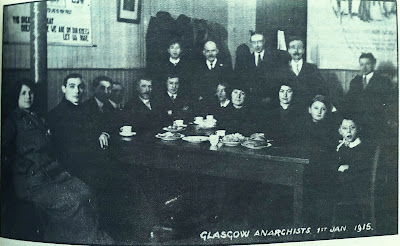
Willie McDougall (aged 20) is said to be standing at the back

   Willie MacDougall got on his bike - or rather, the Centre's bike - and cycled back to Glasgow from whence he had come. There was no ambiguity about his position. He had been preaching anti-parliamentary communism and anti-militarism when he was arrested. He simply went back and continued the good work - for the next sixty-six years, when he died, still in harness.
 - John Taylor Caldwell, Come Dungeons Dark, 1988, pp.155-6


2. MacCallum, John Cameron  (name as in 1913 Medical Register Great Britain online).

In Objectors and Resisters (p. 109) Dr MacCallum is described as an Edinburgh graduate in Arts and Medicine who in his early 30s had become Medical Officer of Health for Argyllshire, specialising in tuberculosis, as well as having been a Scottish rugby international. He chose to become a CO rather than seek occupational exemption, and was one of those sent to do noxious work in appalling conditions at an ‘artificial manure’ manufacturers in Broxburn, near Edinburgh. There he was himself victimised after he had spoken out against abusive treatment of the workers and was accused of exerting a bad influence. A letter of protest about his arrest and recall to the army was addressed to the Home Office in May 1917, but in spite of this and of the concern expressed in Parliament as below, he was returned to Perth prison, where he served a third sentence in 1918.

Record set          Conscientious Objectors' Register 1914-1918:
John C Dr? McCallum
Occupation         Doctor and TB officer for Argyllshire
Age        32
Birth year            1884
Year       1916
Address               Muckairn Manse*
Address 2            Taynuilt
Local authority  Lorn County District
County Argyllshire
Country                Scotland
Latitude               56.42
Longitude            -5.24
Ordnance Survey reference        NN000310
Absolutist            Yes
Motivation          -
Military Service Tribunal                MST (Military Service Tribunal) Central Tribunal at Calton CP (Civil Prison), Edinburgh, 1.9.16 - CO class A, to Brace Committee
Central Tribunal                Central Tribunal Nos. W.1143 Class: A - Genuine
War Service        Argyll and Sutherland Highlanders, Depot Stirling CM (Court Martial) Stirling 15.6.16 - 6 months HL (With hard labour) com.to 112 days Perth CP (Civil Prison); to HOS (The Home Office Scheme, administered by the Brace Committee); returned to unit; CM (Court Martial) Perth 28.6.17 - 18 months HL (With hard labour); CM (Court Martial) Kinsale 13.5.18 - 18 months com.6 months
Prison   Perth CP (Civil Prison) 19.6.16 to 28.8.16 to Edinburgh; Perth CP (Civil Prison) 3.7.17 to 29.4.18 to Stirling; Dumfries CP (Civil Prison); By Jan.1919 had served 2/3 sentences and more than two years (10 months HOS (The Home Office Scheme, administered by the Brace Committee)).
Work Centre      HOS (The Home Office Scheme, administered by the Brace Committee) Wakefield; Messrs Rough and Sons, Artificial Manure manufacturers, Broxburn, Edinburgh; 10 months HOS (The Home Office Scheme, administered by the Brace Committee)
Work Centre comments               Rejected/rejected by HOS (The Home Office Scheme, administered by the Brace Committee) (?); Q in H 14.6.17 and 18.6.17 asked by T. E. Harvey re his skills being 'wasted' on HOS (The Home Office Scheme, administered by the Brace Committee)
WO363 false
Notes    *Father's address; Q in H 18.6.17 also referred to his being 'one of the finest football players who has ever played in Scotland'
Sources                COH33 21.6.17 p.407 and 411; NA/WO86/70/124, 76/151, 82/64; Letter from his father 6.7.17 in T.E.Harvey MP ([Military Prison Member of Parliament]) Correspondence Friends House Temp.Mss.835 Box.4; FH/FSC(1916/20)/SER3 - COIB Two Year Men, SER3 - COIB Two Year Men Draft List NAS/HH31/29/1 - COs in Scottish Prisons July 1916; NAS/HH31/29/6 - Central Appeal Tribunal 1.9.16; NAS/HH21/47/16 Perth Prison Register; NA/MH47/1 Central Tribunal Minutes FH/SER/VOPC/Cases/5(1432)

The questions in the House, and the answers they received, such as they were, run as follows (the first is "written", hence the repetition):

CONSCIENTIOUS OBJECTORS.
HC Deb 14 June 1917 vol 94 cc1148-50W 1148W

asked the Home Secretary whether Dr. J. C. M'Callum, a graduate of Edinburgh University, medallist and holder of the Monat scholarship, executive tuberculosis officer for the county of Argyll, holding the diploma of public health, and having specialised in the treatment of tuberculosis, has been employed by the Home Office Committee on Employment of Conscientious Objectors, first at Wakefield and then as a labourer in the manufacture of manure for Messrs. Rough and Sons, Broxburn, Edinburgh; whether, in consequence of a breach of workshop discipline. 1149W this employment has been terminated; and whether, in the national interest, he will consider the possibility of employing this specialist on public health work under whatever financial conditions the Committee's regulations impose instead of on work for which he is not fitted or instead of sending him back to court-martial and prison?
John M'Callum has been employed as stated. His employment has been terminated, not for one, but for several breaches of discipline. The Committee on the Employment of Conscientious Objectors have recommended his recall to the Army, and the case is now out of their hands. Dr. M'Callum has never applied to the Committee to be released in order to take up employment as a doctor, but he and members of his family have made applications for him to be allowed to do ploughing and similar work for relatives.

CONSCIENTIOUS OBJECTORS.
HC Deb 18 June 1917 vol 94 cc1407-9 1407
32. The HON. MEMBER [Mr. Harvey]
asked the Home Secretary whether Dr. J. C. MacCallum, a graduate of Edinburgh University, medallist and holder of the Monat scholarship, executive tuberculosis officer for the county of Argyll, holding the diploma of public health, and having specialised in the treatment of tuberculosis, has been employed by the Home Office Committee on Employment of Conscientious Objectors, first at Wakefield and then as a labourer in the manufacture of manure for Messrs. Rough and Sons, Broxburn, Edinburgh; whether, in 1409 consequence of a breach of workshop discipline, this employment has been terminated; and whether, in the national interest, he will consider the possibility of employing this specialist on public health work under whatever financial conditions the Committee's regulations impose, instead of on work for which he is not fitted or instead of sending him back to court-martial and prison?
John MacCallum has been employed as stated. His employment has been terminated, not for one but for several breaches of discipline. The Committee on the Employment of Conscientious Objectors have recommended his recall to the Army, and the ease is now out of their hands. I understand that Dr. MacCallum has never applied to the Committee to be released in order to take up employment as a doctor, but he and members of his family have made applications for him to be allowed to do ploughing and similar work for relatives.
Will the right hon. Gentleman consult the Under-Secretary of State for War on the matter? Is he aware that this man is one of the finest football players who has ever played in Scotland? Will he get some details and put him to useful work?
§Sir G CAVE 
It is a matter of recommendation.
Mr. HARVEY 
Will the right hon. Gentleman consider that this Committee should employ doctors for medical work in view of the great need for doctors in the country? Is it not uneconomical that they should be employed on making mail bags and artificial manures?
§Sir G. CAVE 
If applications were made for their services no doubt they would be considered.
Mr. HARVEY 
Is it not their duty to find out for themselves?
Would it not be better to employ as medical men doctors who are not shirkers?
§Mr. HOGGE 
He is not a shirker.
Does the right hon. Gentleman consider this an instance of scientific organisation?

John MacCallum's father wrote to Mr. Harvey on 6th July 1917, referring to his having been good enough to ask the above Parliamentary Question, and informing him that John had been court-martialled at Perth and sentenced to 18 months, reduced to one year. Describing his son's imprisonment as a gross injustice and a pure loss to the nation, the Rev. Malcolm MacCallum asserted that John had undertaken and performed the disagreeable work that was given him and asked: "Why not allow him to serve in a Hospital under civil control? No penalty can break down his objection to military service." (Correspondence in Friends House Library, Euston, Temp. MSS 835/M/1 Box 4).


3. James Edny Sangster also served time in Perth prison, and while there was, along with James Maxton (Edinburgh), the subject of adverse comment by Scottish Prison Commissioner Dr James Devon, as previously noted:
In my opinion Sangster is more than a little daft, and Maxton more insane than sane. Neither is accessible to reason. They are alike in their exaggerated egoism and in their want of a sense of proportion, and I should not be at all surprised if either or both of them become certifiably insane.’  
James Sangster avoided that outcome (unlike perhaps about 30 other COs), but  his fate was nevertheless a tragic one, after he apparently abandoned his conscientious objection: sent to France in July 1917, "missing presumed killed" a month later.  

James Ednie [/Edny] Sangster
Marital status    Married (3 [children])
Occupation         Upholsterer
Age        32
Birth year            1884
Year       1916
Address               72, Church Street
Address 2            Dundee
Local authority  Dundee City
County Forfarshire Angus
Country                Scotland
Latitude               56.47
Longitude            -3.04
Ordnance Survey reference        NO360320
Service number                S/21209
Motivation          'Quaker' and 'No religion' [Being designated a Quaker in prison could mean a chance to communicate with the outside world via sympathetic chaplains
Military Service Tribunal                MST (Military Service Tribunal) Refused to use Tribunal system because 'they can't judge a man's conscientious claims.' (Evening Telegraph 25.7.16)
War Service   11 Gordon Highlanders (S/15126), CM (Court Martial) Bridge of Allan 23.8.16 - 2yrs.HL (With hard labour), Barlinnie CP (Civil Prison). Quit his CO - Re-joined the colours, 25.4.17, 42 TRB; Transferred to Argyll and Sutherland Highlanders (S/21209) 11.6.17; to France 20.7.17 Missing 22.8.17 presumed killed - Tyne Cot Memorial
War Service comments Refused to sign
Magistrates Court            Arrested, tried at Dundee Police Court 25.7.16, fined 40/- and handed over
Magistrates Court comments     Absentee
Prison   Barlinnie CP (Civil Prison) 28.8.16 to 12.10.16 released to HOS (The Home Office Scheme, administered by the Brace Committee), Ballachulish; Duke Street 8.1.17 to 13.1.17 transfer to Perth; Perth CP (Civil Prison) 13.1.17 to 25.4.17 to Tillicoultry
Work Centre      HOS (The Home Office Scheme, administered by the Brace Committee) 12.10.16 to Ballachulish; transferred to Army Reserve Class W 2.11.16; refused the work at Kinlochleven/Ballachulish and sent to Duke Street CP (Civil Prison) to serve the remainder of his sentence.
WO363 false [actually true according to Sources, confirmed by records online]
Sources                NCF (No-Conscription Fellowship)/COIB Report XXX; NA/WO86/71/123; NAS/HH21/70/55 Barlinnie Register 1916-1919; NAS/HH21/32/137 Glasgow Duke Street 1916-18; NA/WO363 - on line (Detailed file); CWGC; NAS/HH21/47/16 Perth CP (Civil Prison) Register; Dundee Courier 26.7.16 re.trial; Evening Telegraph 25.7.16 re.trial;
Record set          Conscientious Objectors' Register 1914-1918

4. The case of Alexander Campbell', another 'Quaker' (although the term was sometimes used generically for COs in prison) and an ILP member, was arguably more tragic still.

Record set          Conscientious Objectors' Register 1914-1918:
Alexander Neil Campbell
Age        25
Birth year            1891
Year       1916
Address               531 Cathcart Road
Address 2            Glasgow
Local authority  Glasgow City
County Lanarkshire
Country                Scotland
Latitude               55.85
Longitude            -4.25
Ordnance Survey reference        NS590650
Absolutist            Yes
Motivation          ILP (Independent Labour Party) (Govanhill Branch); Quaker
Military Service Tribunal                MST (Military Service Tribunal) Central Tribunal at Wormwood S. 10.11.16 - refused to accept HOS (The Home Office Scheme, administered by the Brace Committee) conditions
Central Tribunal                Central Tribunal Nos. W.2024 Refused HOS
War Service        Depot R.Scots Fusiliers, Ayr; CM (Court Martial) Ayr 20.10.16 - 112 days HL (With hard labour), Wormwood S.; CM (Court Martial) Ayr Barracks 1.2.17 - 9 months HL (With hard labour); CM (Court Martial) Ayr 9.7.17 - died at Ayr Barracks 11.7.17 'Committed suicide, died in a few minutes'
War Service comments Alleged suicide
Magistrates Court            Arrested tried and handed over 13.10.16;
Magistrates Court comments     Absentee
100 years on
Prison   Wormwood S.; Ayr CP (Civil Prison) 5.2.17 to Duke Street CP (Civil Prison), Glasgow 6.4.17; Duke Street 6.4.17 to 12.4.17 transfer to Barlinnie CP (Civil Prison); Barlinnie CP (Civil Prison) 12.4.17 to 30.6.17 released to unit.

WO363 false
Notes    *Died after arrest but not in prison - according to NCF souvenir. He actually died - allegedly suicide - at Ayr Barracks July 1917 (D/Mar/4/21)
Sources                NCF (No-Conscription Fellowship) Souvenir; Cumbria RO(Carlisle)D/Mar/4/56, D/Mar/4/21; NCF (No-Conscription Fellowship)/COIB Report LIII; FH/FSC(1916/20);The Friend 10.8.17 (Report of his suicide) - see also Tribunal 26.7.17; NA/WO86/72/40, 73/186; FH/FSC(1916/20)/SER28 Case file; NAS/HH21/27/23 Ayr Prison Nominal Register; NAS/HH21/70/55 Barlinnie Register 1916-1919; NA/MH47/1 Central Tribunal Minutes; FH/SER/VOPC/Cases/2(2768)

* The "allegation" is confirmed by his "British Army service record":
"Died at Ayr on 11-7-17 of Suicide by cutting throat"
His suicide is also mentioned briefly in Ann Kramer’s book Conscientious Objectors of the First World War, 2014 (p.143) and  (as N A Campbell) he is on the list compiled by the Conscientious Objectors Information Bureau in 1921 of 73 COs - including eight with addresses in Scotland - who at the time were known or believed to have “died as a direct result of their treatment..." as referenced by Boulton:
From David Boulton, Objection Overruled, 2014 edition, p.266 note 8.
The list also appears in John Taylor Caldwell, Come Dungeons Dark, 1988, pp.289-90.
          The ordeal of consecutive prison sentences proved too great for Alexander Campbell, age 19, a member of Govanhill ILP, who committed suicide after a third court martial at Ayr barracks in July 1917. He had already served two prison sentences, at Wormwood Scrubs and Barlinnie, and at court martial ‘seemed to be in a state of nervous collapse. In this pitiable condition, he yielded to the persuasion of the court and consented to become a soldier’.  Two days later, full of remorse at giving in after battling the system for so long, he cut his throat with a razor. Quaker chaplains who had visited Campbell in prison described him as ‘a sensible, bright, intelligent young man, the sincerity of whose convictions impressed itself upon them’. The report concluded that ‘the long confinement and meagre diet of the prison had done their work ii reducing his physical powers and mental stamina, and his death is another terrible indictment of our penal system.’      - Robert Duncan, Objectors and Resisters, p.194; sources for this paragraph are given as  Forward (ILP paper) and The Tribunal (No-Conscription Fellowship paper) 

5. After this the case of Hugh Gemmell strikes a happier note, as he seems, if Duncan is right, to have been one that got away, eventually. His record on the COs' Register is not very informative, however.

Hugh Gemmell
Age        24
Birth year            1893
Year       1917
Address               -
Local authority  -
County -
Country                Great Britain
Latitude               -
Longitude            -
Ordnance Survey reference        -
Absolutist            Yes
Motivation          Non-Sect.
Military Service Tribunal                MST (Military Service Tribunal) Central Tribunal at Wormwood S. 24.9.17, refused to accept HOS (The Home Office Scheme, administered by the Brace Committee) conditions
Central Tribunal                Central Tribunal Nos. W. 4323 Refused HOS
War Service        Depot Scottish Rifles CM (Court Martial) Hamilton 7.8.17 - 112 days HL (With hard labour), Wormwood S.
Prison   Wormwood S. 11.8.17 to 9.11.17 to Escort
WO363 false
Sources                NA/WO86/77/68; LMA/4417/01/016 - Wormwood S. Nominal Register; Not found in NA/WO363; NA/MH47/2 Central Tribunal Minutes; FH/SER/VOPC/Cases/3(4440)
Record set          Conscientious Objectors' Register 1914-1918
``````````````````````````````````````````````````````````````````````
Turning again to Objectors and Resisters, pp.67-69, we find more about him. 
From notes -  
Hugh Gemmell, class-war socialist and activist; Bridgeton ILP, organiser for Shop Assistants Union: The LP paper Forward carried a transcription of proceedings at his Local Tribunal hearing (22-5-16) in which he took an unequivocally revolutionary and non-pacifist stance. He is quoted as saying “I believe in one war, the class war, the struggle that is always going on between capital and labour for control of the means of life" and states that he would bear arms to defend common ownership of the means of life.  Very unusually, the Sheriff in charge of the Tribunal was "sorry to say" the case was dismissed, claiming he understood and could admire a man who had evolved such a position and stuck to it, but considering its "entirely political" nature set it outside the provision for conscientious objection.. Accordingly he willingly granted leave granted for an appeal to the Central Tribunal, saying he “would like to make it a test case.”  The appeal was predictably unsuccessful but according to Duncan, Gemmell seems to have avoided arrest after refusing to go on the Home Office work scheme and continued politically active until shortly disappearing from the record, possibly - the author speculates hopefully - on the run and helped to reach safety in Ireland, like other COs aided by the support networks that grew up in several places...

Interestingly and encouragingly, someone of the same name does indeed turn up in an appropriate context, at a possible sort of date if he stayed after the war, in Northern Ireland: "In March 1925 the first issue of the newspaper The Labour Opposition of Northern Ireland appeared, published by the Northern branch of the ILP and edited by Hugh Gemmell..."
Politics and the Irish Working Class, 1830–1945 [search result]
https://books.google.co.uk/books?isbn=0230503772
Donal Ó Drisceoil, ‎F. Lane - 2005 - ‎History. "Walker's outright opposition to Irish home rule had eventually put him at odds with ... published by the northern branch of the ILP and edited by Hugh Gemmell..."
East wall of Wormwood Scrubs prison, 1989
(scene of George Blake's celebrated assisted escape in October 1966)